
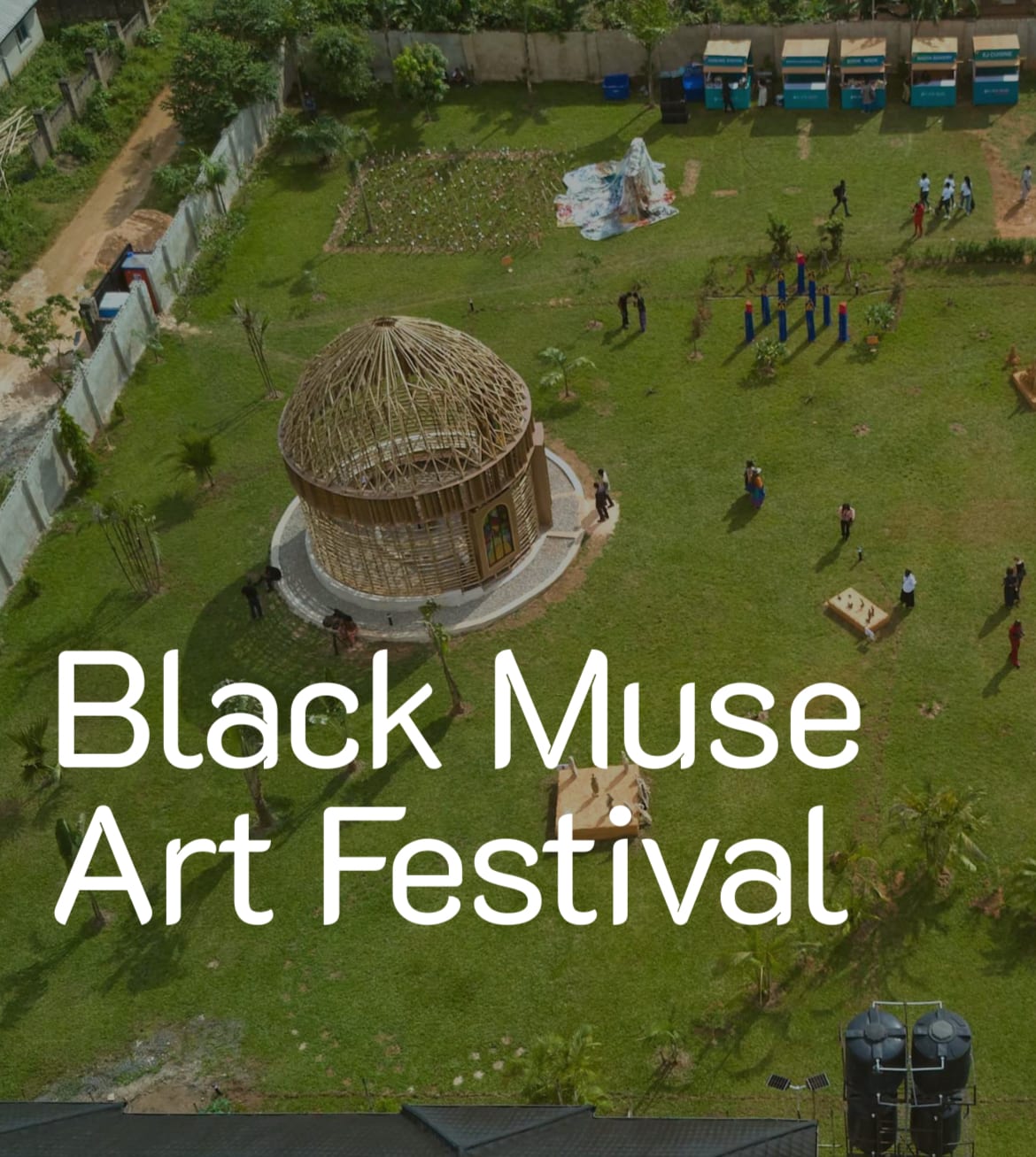
Black Muse Art Festival returns to Benin City from November 7 to 10, 2026, with a question drawn from literature: How do we astonish the gods?
For its second edition, the festival is themed “For Those Who Astonish the Gods,” taking inspiration from Ben Okri’s Astonishing the Gods. It follows the 2025 debut, “Let the Forest Dance,” which drew on Wole Soyinka’s A Dance of the Forests. But the literary reference is more than a thematic label.
At a press and stakeholders’ sessionheld at Angels and Muse on October 23, the organisers outlined a programme presents astonishment as attention—the willingness to see what has always been there, and to refuse to dismiss it as ordinary.
A Festival Built Beyond The Gallery
BMAF began in 2025, created by Angels and Muse, the non-profit cultural organisation founded by Nigerian multidisciplinary artist and writer Victor Ehikhamenor in 2018.
Its inaugural edition, held across multiple sites in Benin City from November 8 to 12, was themed “Let the Forest Dance,” and marked the opening of the Black Muse Sculpture Park—a 3,500-square-metre green space in the heart of the ancient city—alongside an exhibition featuring works by seven artists.
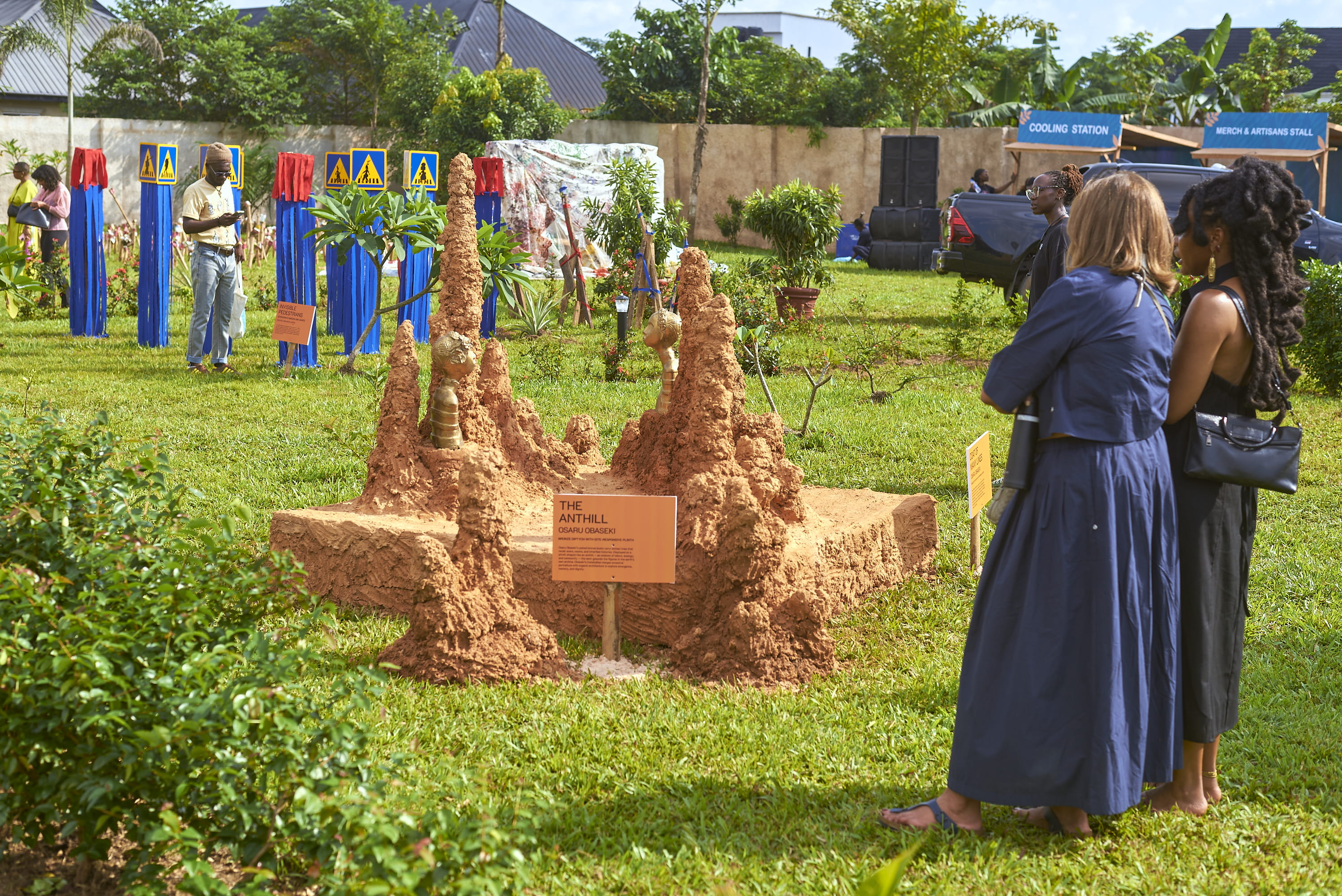
Images of the inaugural edition
This year’s edition builds on that foundation.
The festival will span exhibitions, workshops, conversations, school visits, theatre, film, publishing initiatives, and community programming. But its larger ambition is not just a bigger programme. It is a wider definition of who belongs in the room.
At the briefing, Mr Victor Ehikhamenor described the original intention plainly: the goal was never simply to create another festival, but to build a space where artists, writers, architects, thinkers, and cultural practitioners could exchange ideas, make new work, and imagine different cultural futures.
“We wanted to contribute to a cultural landscape in which meaningful artistic experiences are not limited to major urban centres,” he said, “but can flourish wherever there’s history, knowledge, creativity and a community willing to engage.”
Beyond What Hangs On A Wall
For Ehikhamenor, the festival’s broader ambition begins with a reconsideration of what counts as art.
“When we say art, in our community, art goes beyond what hangs on the wall, beyond what you can explain,” he said.
Reducing African art to commercially legible objects, he suggested, risks losing the stories and knowledge carried through other forms of cultural expression. That idea became tangible during the briefing demonstration of the Azagba pavilion—a compound-inspired structure commissioned for this year’s festival and intended to become a recurring feature of future editions.
The pavilion makes architecture part of the artistic conversation rather than a backdrop for it. So do the gardens, plants, masks, songs, publications and knowledge systems woven into the wider programme.
The festival’s curatorial direction, led by Ghanaian curator Esinam Damalie, features seven artists from Ghana and Nigeria. Its broader programme also reaches beyond conventional visual art to include horticultural practices and a choir performing songs curated by artist, music producer and writer Onye.
Plants and flowers are presented not merely as decoration but as artistic material. Their cultivation, growth and care become practices through which a community can learn.
Among the participating artists, Jonathan Chambalain will work with cactus, while Temitayo Badru is preparing an installation centred on Ori, a concept in Yoruba thought associated with an individual’s spiritual identity and destiny. His work uses 401 traditional fila caps and invites visitors to write wishes or prayers and place them into the installation.
These projects reflect the festival’s interest in how audiences experience art beyond the conventional gallery setting. By placing works in conversation with greenery, landscape and built structures, the programme invites visitors to engage with art through different senses and perspectives.
The point is not simply to display objects. It is to create encounters: between art and ecology, between visitors and memory, between inherited practices and contemporary forms.
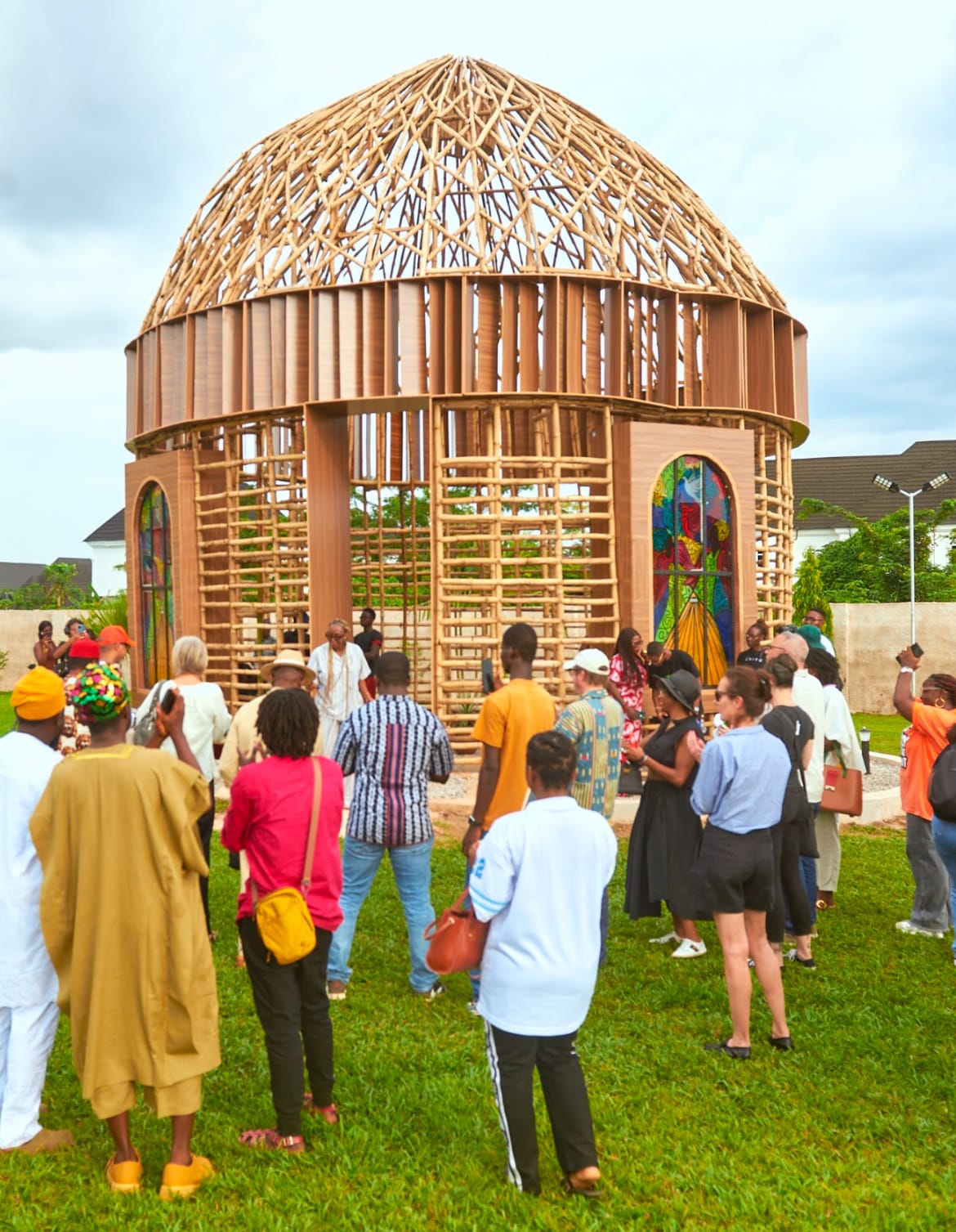
Images from the inaugral BMAF edition
Ecology As Collaborator
Ecology is another thread running through this year’s programme.
The festival’s sculpture and exhibition plans emphasise environmentally friendly, locally sourced materials: where bamboo featured last year, this year’s projects will make greater use of timber sourced from Benin, alongside raffia masks from northern Nigeria and baskets.
The works are conceived within an ephemeral cycle: installations may be dismantled, relocated or preserved after the festival, rather than remaining permanent fixtures.
The ecological workshops aim to connect plants with local memory, inviting participants into environmental knowledge and sustainable practice. Rather than treating nature as a theme to illustrate, the festival treats it as a collaborator—something with its own history, cycles, and forms of knowledge.
This also shapes how audiences encounter the work; through green space, landscape, and structures that invite movement rather than passive viewing.
Publishing Beyond The Book
The festival’s interest in how knowledge is created and transmitted also extends to publishing.
A planned initiative, the Glossary of Terms publications, will take two forms: flash cards and longer publications.
Conceived through curatorial conversations about heritage, displacement and marginalised regions, the project aims to make ideas and knowledge available beyond the immediate spaces of exhibitions and institutional gatherings.
The flash cards are intended to offer a more immediate form of engagement, while the publications cater to readers seeking a deeper exploration of the ideas involved. The initiative reflects a broader ambition to leave audiences with something they can continue to use and share after the festival has ended.
A related conversation, “If Not a Book, Then What?”, will explore publishing as an archival practice, considering whether fabric, sound, performance, objects, images and games can also preserve and transmit knowledge.
Together, the conversation and publications extend the festival’s central question beyond the exhibition space: if cultural knowledge can take many forms, what other ways are there to record it, share it and carry it forward?
Taking the Festival beyond its core audience
Wider participation among local residents is another key ambition for the second edition.
Alongside artists, writers, curators and other cultural practitioners, they hope to engage primary and secondary school students, undergraduates, National Youth Service Corps members, families, artisans and corporate professionals.
One of the most concrete expressions of that ambition is a book drive aiming to distribute 1,000 creative books to children in public primary and secondary schools across Benin City.
The organisers hope the books will encourage curiosity and expand young readers’ imaginative horizons beyond the immediate boundaries of their everyday environments and school curricula.
The initiative is supported through a collaboration with Rovingheights, where physical books can be donated or purchased, alongside a voucher system that allows supporters to contribute directly to the book fund.
Library sessions, reading spaces, and visual-creativity activities are planned for children, while adults will have their own range of conversations, workshops, and exhibitions.
A collaboration with the University of Benin’s Department of Fine and Applied Art and Department of Theatre Arts will bring students and faculty into the festival through activities including exhibitions, performances, readings and workshops.
For a festival whose theme asks how people might astonish the gods, its children’s programme represents a tangible investment in the future. More broadly, these initiatives aim to make the festival more than an event attended by an existing arts audience, creating opportunities to encounter art through education, reading, performance and community participation.
Infrastructure is People
When asked how BMAF advances Angels and Muse’s broader mission of building creative infrastructure, Ehikhamenor resisted the idea that infrastructure begins with buildings.
“You can build a house, but is the house really the infrastructure?” he asked. “Humans are the infrastructure.”
For him, the work of building cultural infrastructure therefore includes developing generations of artists and practitioners who can carry institutions forward. The priority, therefore, is capacity: training, mentorship, residencies, and opportunities for artists to grow beyond a single exhibition.
He pointed to participants from the inaugural edition who have since progressed in their careers, showing and installing work in international venues. This year, the festival aims to widen that platform further, including filmmakers and other practitioners.
What does it mean to astonish?
The question at the centre of this year’s edition is not necessarily about producing something unprecedented.
Drawing on Okri’s Astonishing the Gods, the festival’s curatorial direction considers astonishment as a way of seeing and imagining beyond inherited expectations. It invites audiences to look again at what might otherwise be treated as ordinary, familiar or already understood.
That approach connects the programme’s seemingly disparate elements: the pavilion as architecture, plants as artistic forms, traditional caps as a participatory installation, and publishing as something that can happen beyond the printed page. Each asks audiences to reconsider the boundaries through which they understand art and cultural knowledge.
The Black Muse Art Festival’s second edition will run in Benin City from November 7 to 10, 2026, with exhibitions, workshops, conversations, performances and community initiatives planned across the programme.
Its ambition is to make art more than something presented to an audience: a way to share knowledge, preserve memory, engage communities and imagine possibilities beyond established definitions.