
"Shebi It's Just an Ankara Backpack."
Adenike Adeleye has heard that before. Her floor mats are now in corporate gift baskets.
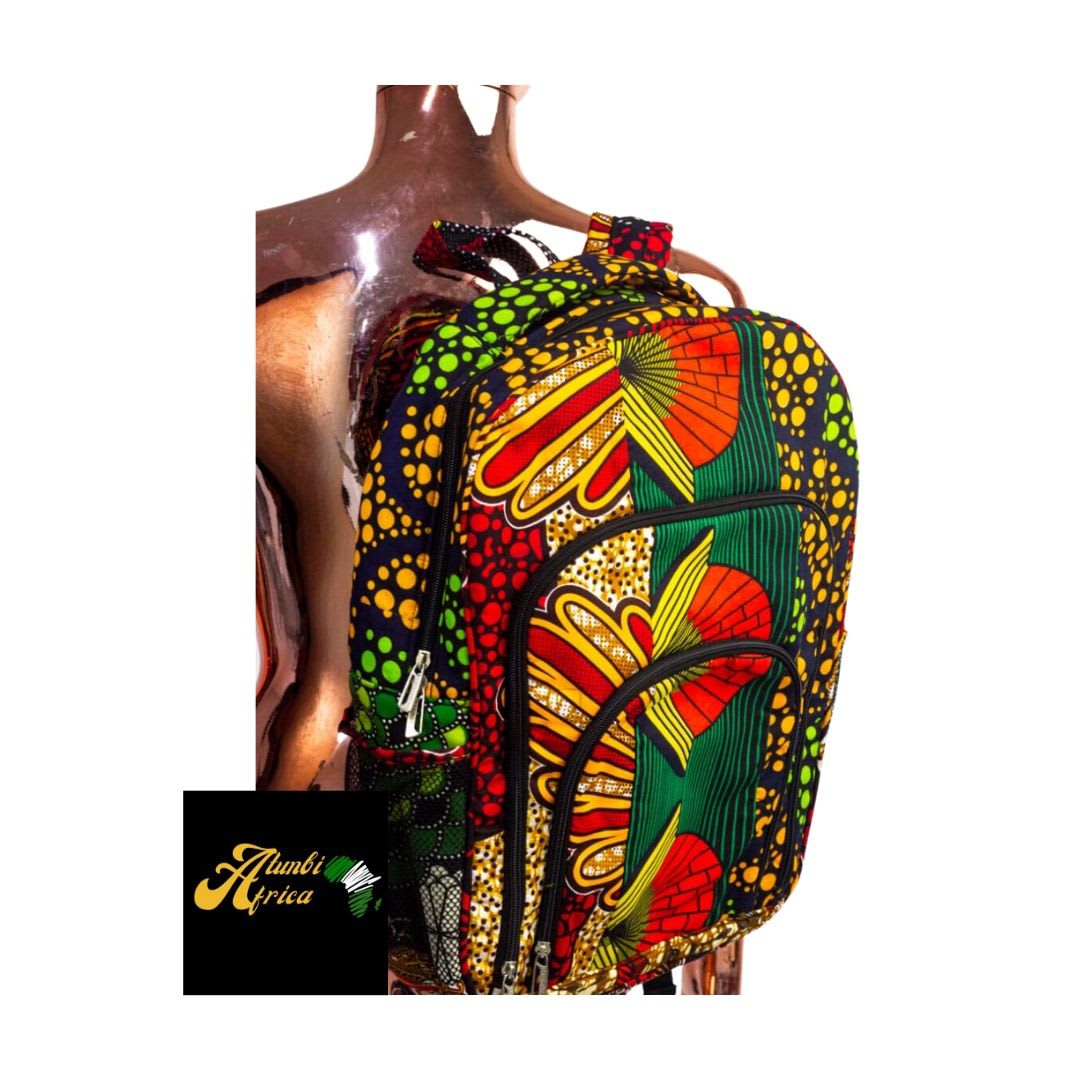
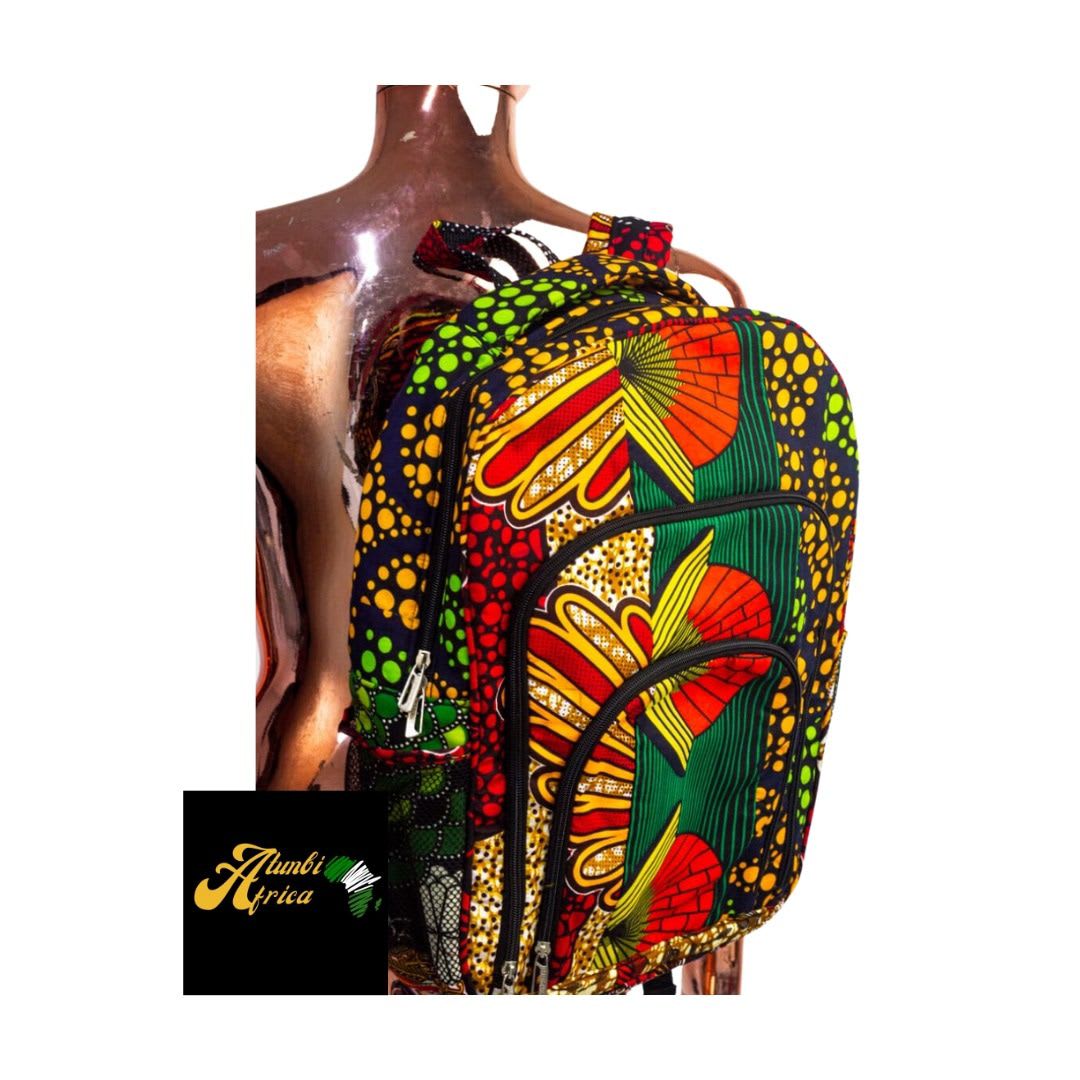
Akanda Backpack (Àkàndà means one of a kind.)
The dismissal comes easily. Someone sees the price tag on a bag made from reclaimed textile, does the math in their head, and concludes the math is wrong. Shebi it's just an Ankara backpack. They are not calculating the hours. They are not counting the experiments that failed. They are not seeing the fabric that didn't hold, the prototype that came apart at the seam, the version that existed only to teach her what the final version needed to be. They see a product. They don't see the process that produced it.
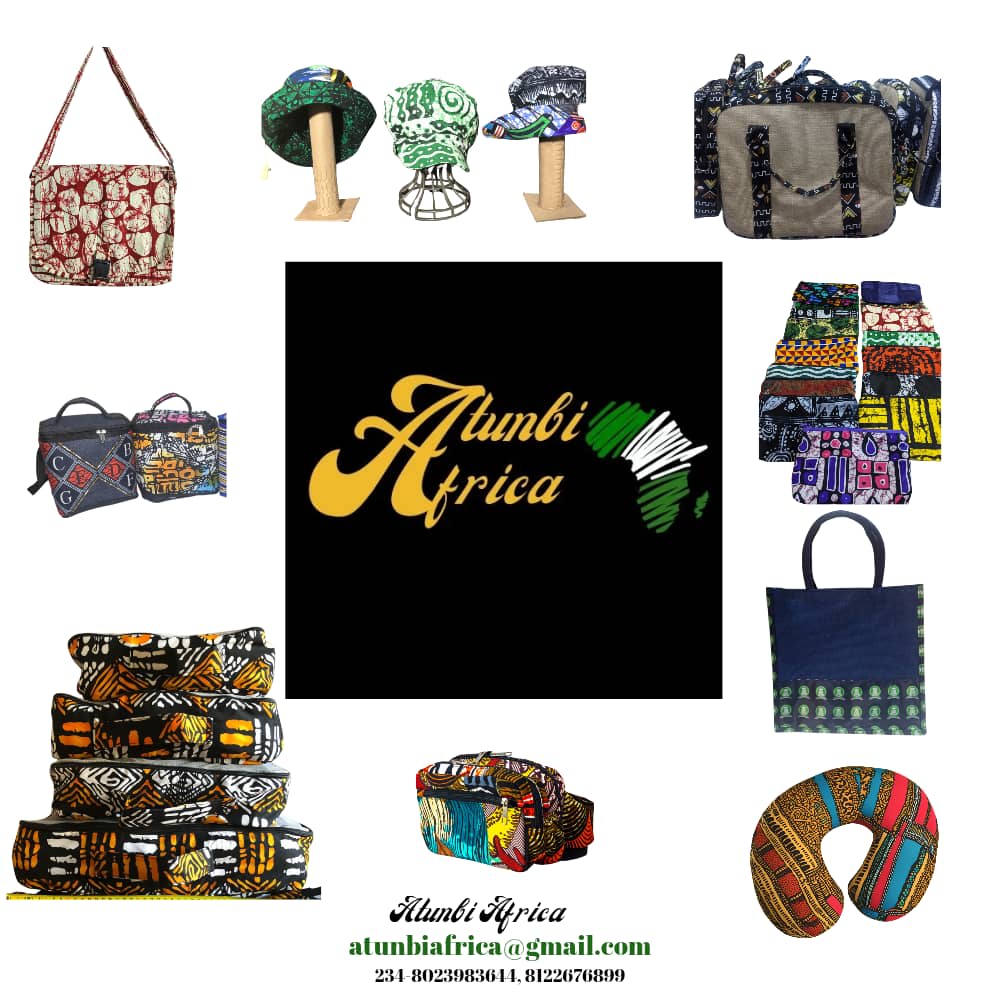
Adenike Adeleye has been making things out of what people throw away for long enough to know this. She is a serial entrepreneur, a sustainability advocate, and a certified recycler — which is a formal way of saying she has studied, professionally, the art of refusing to accept that something is finished just because someone decided it was. Her brand, Atunbi Africa Originals, carries the thesis in its name. Atunbi: Yoruba for something born again. Not repurposed. Reborn.
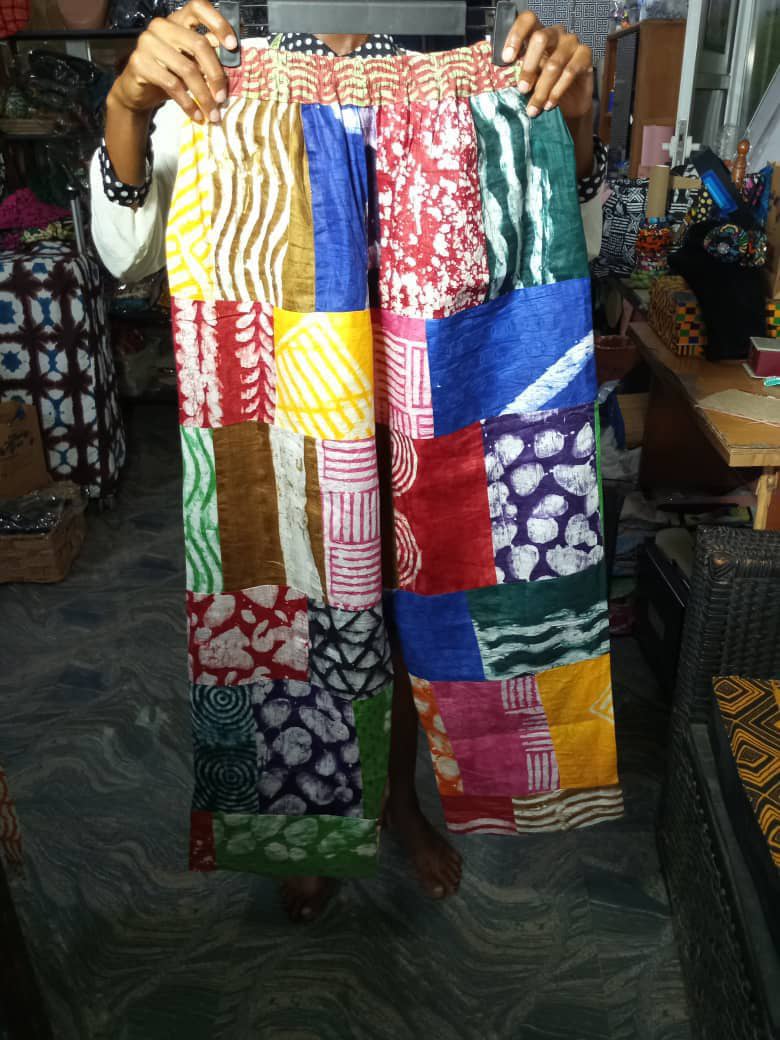
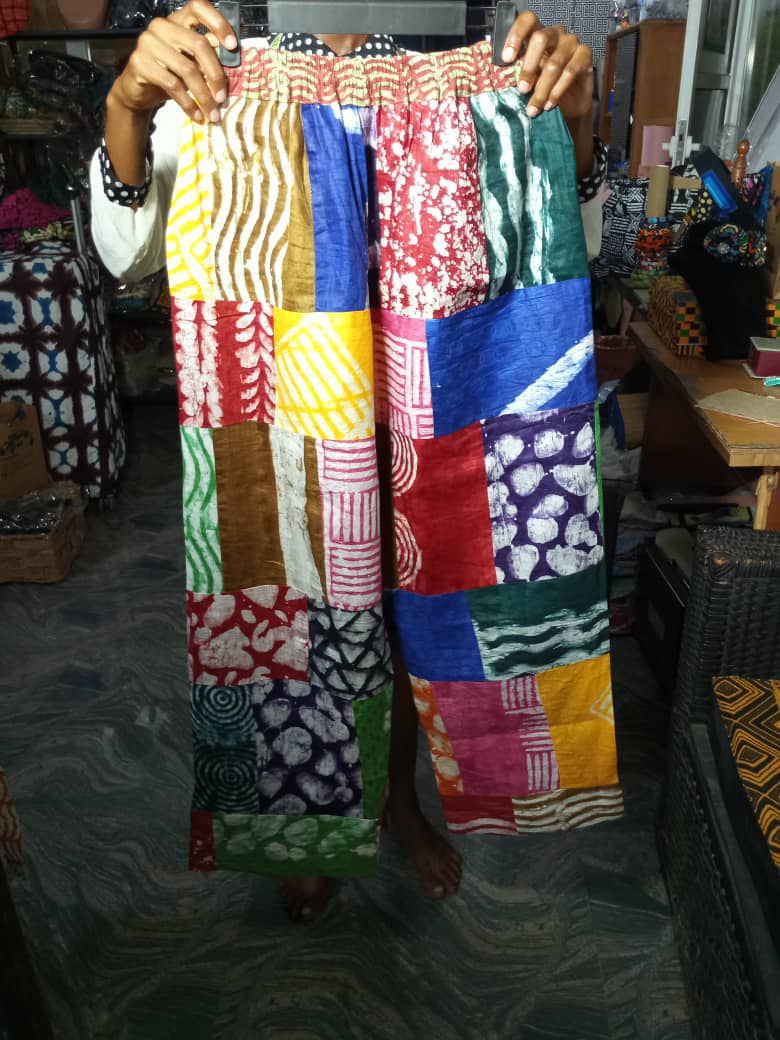
Àtúnwá Patchwork Pants
During a recycling course, she and her group made fabric from purewater nylon sachets and thread.
Think about that for a moment. The sachet water bag — the one that clogs Lagos drains, that litters every market pavement, that Nigerians drink from and throw down without thinking — became cloth. Became material. Became something you could hold up to the light and call a creation. They also made fabric from old clothes, which they then used for floor mats. The kind of floor mat that, by the logic of its origin, should be invisible. Functional. Beneath attention.
One of those floor mats ended up in a corporate gift basket last year. A company used it. And another company is already interested in doing the same.
That arc — from landfill to boardroom gift — is not incidental to what Adenike does. It is what Adenike does. She takes material at the end of its perceived life and proves that perception wrong. The floor mat made from clothes no one wanted is now something a corporation chooses to give. The value was always there. It just needed someone willing to see it.
The hardest part, she says, is that most people aren't willing to look.
They look at price. They calculate against the cheapest version of the thing they know — the imported bag, the factory-made alternative — and they decide the creative's version costs too much. What they're not pricing in is the irreproducibility. You cannot scale an Adenike Adeleye bag the way you scale a container shipment from China. The unevenness is not a flaw. It is the point. It is what makes the thing real.
She makes this argument not with frustration but with a quiet certainty. She has already been proven right. The corporations that put her floor mats in gift baskets understood something the sidewalk critics didn't: that there is a specific, growing desire for things made with hands and intention. That "handmade in Nigeria from reclaimed textile" is, increasingly, not a disclaimer. It's a distinction.
What comes next is about taking that knowledge further than the products themselves.
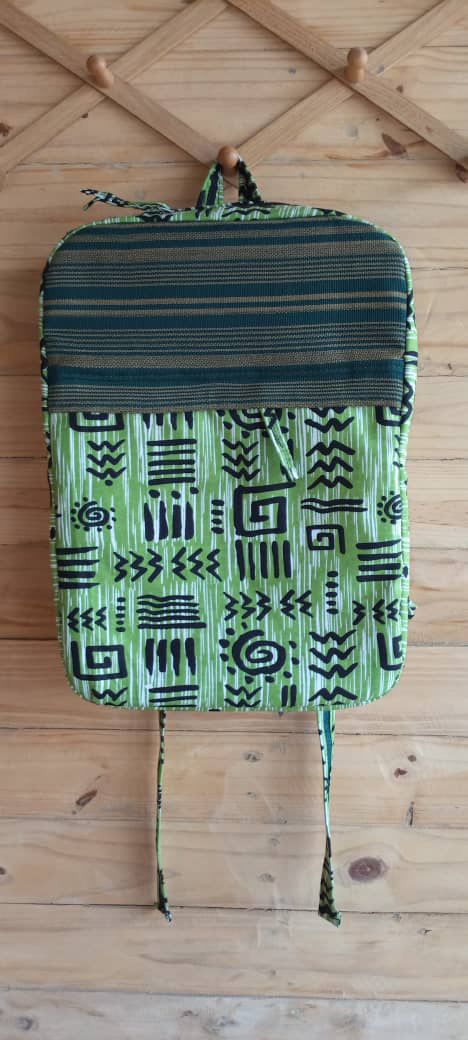
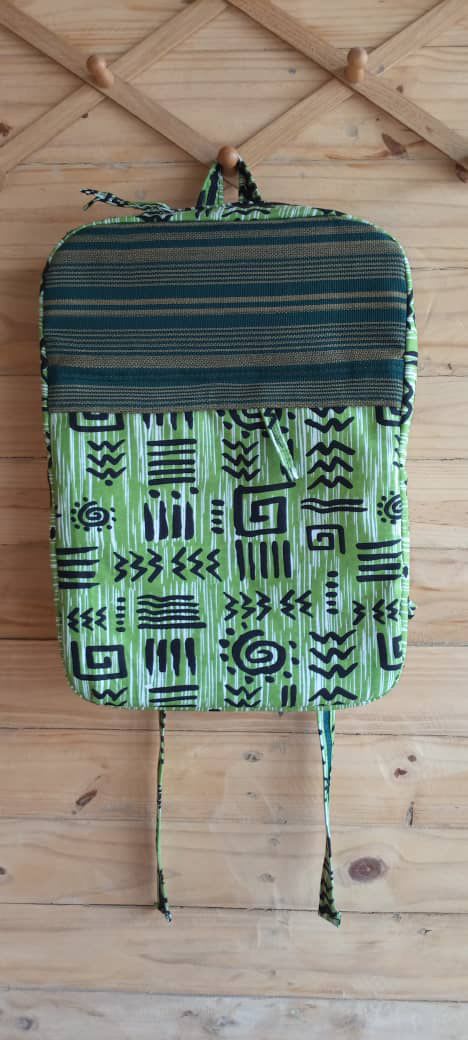
Rewájú Laptop Backpack (Rewájú means moving forward.Its a short form of Olarenwaju.)
Atunbi Africa Originals is building a YouTube channel. The plan is to bring simple DIY projects to the public — using waste materials that are already everywhere, accessible to anyone, and capable of generating real income. This is Adenike at her most revealing. She is not building a luxury brand that lectures people about sustainability. She is building something instructional. She wants people to see how it's done, to pick up the same materials available to them in their own neighborhoods, and to make something out of what was previously nothing.
The channel is called Atunbi Africa Originals.
The work continues to explain itself.
Explore Atunbi Africa Originals on Escape Marketplace.