

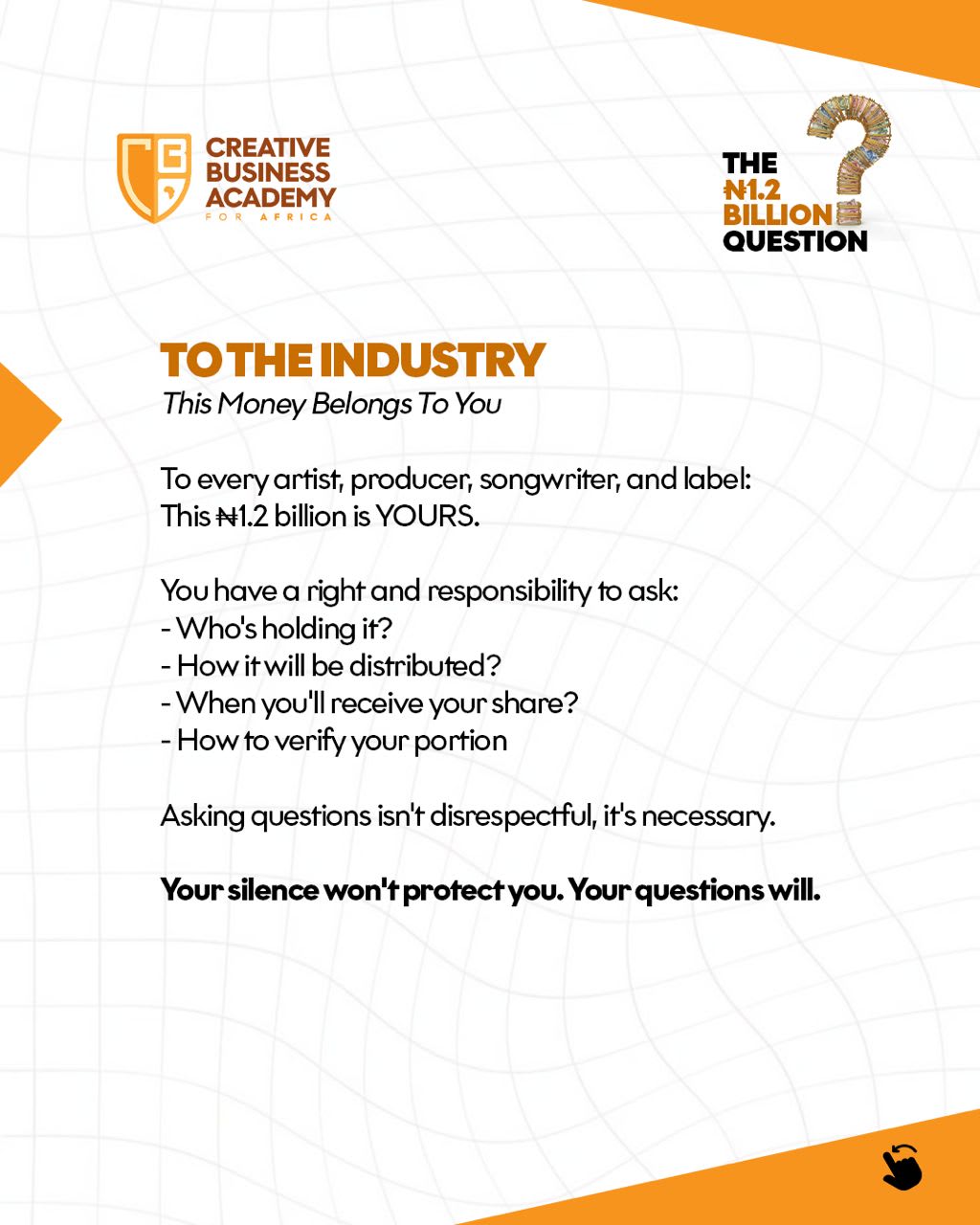
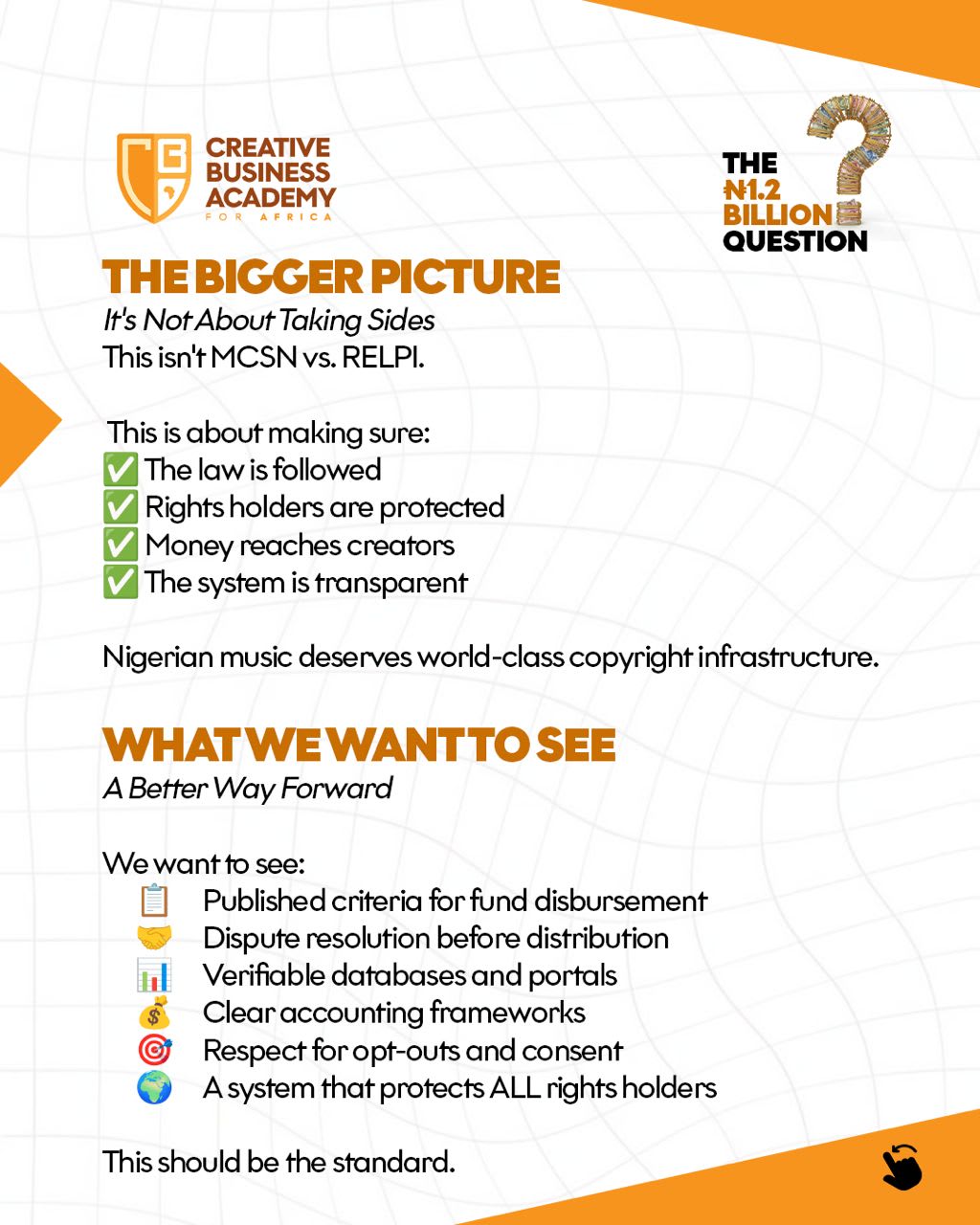
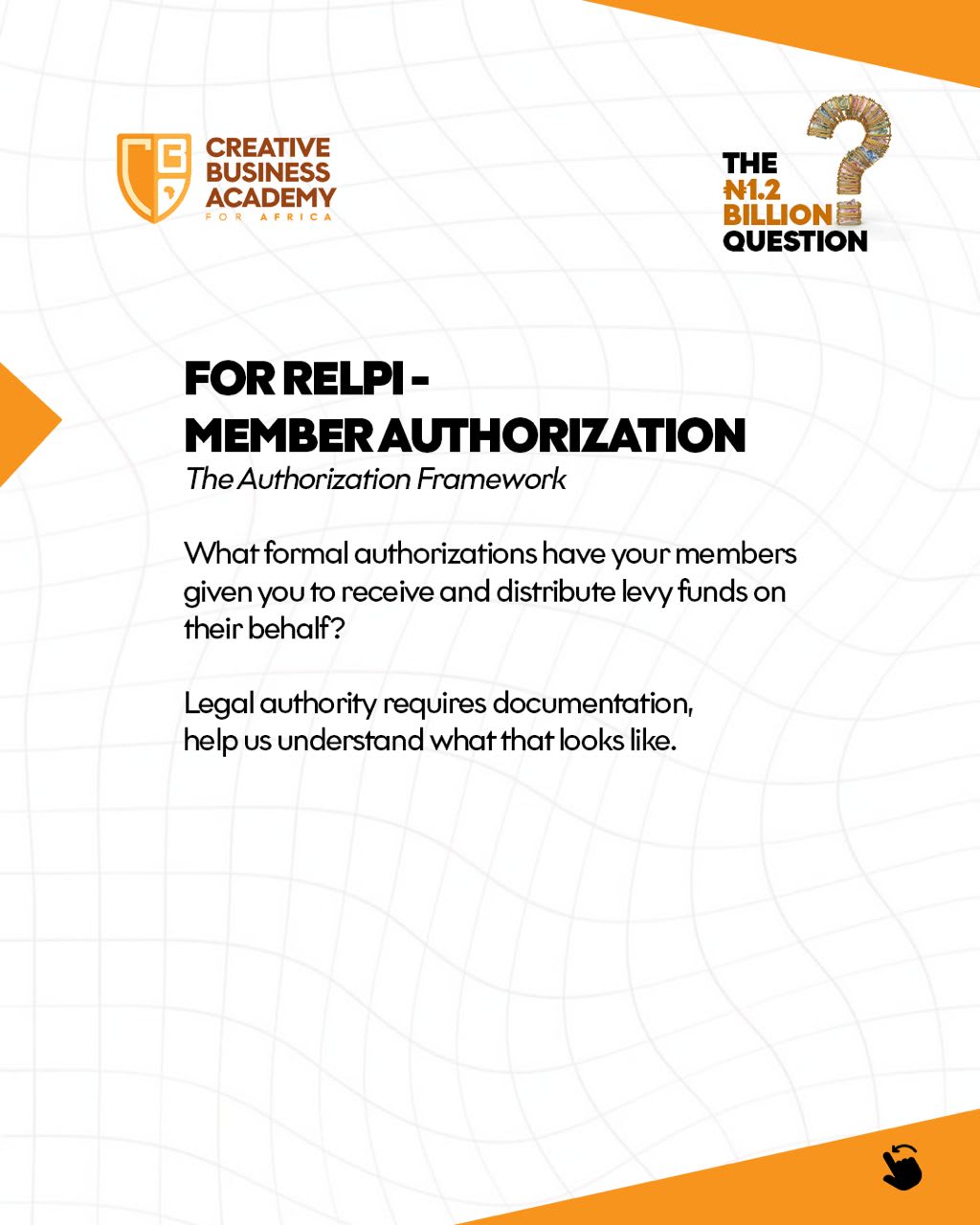
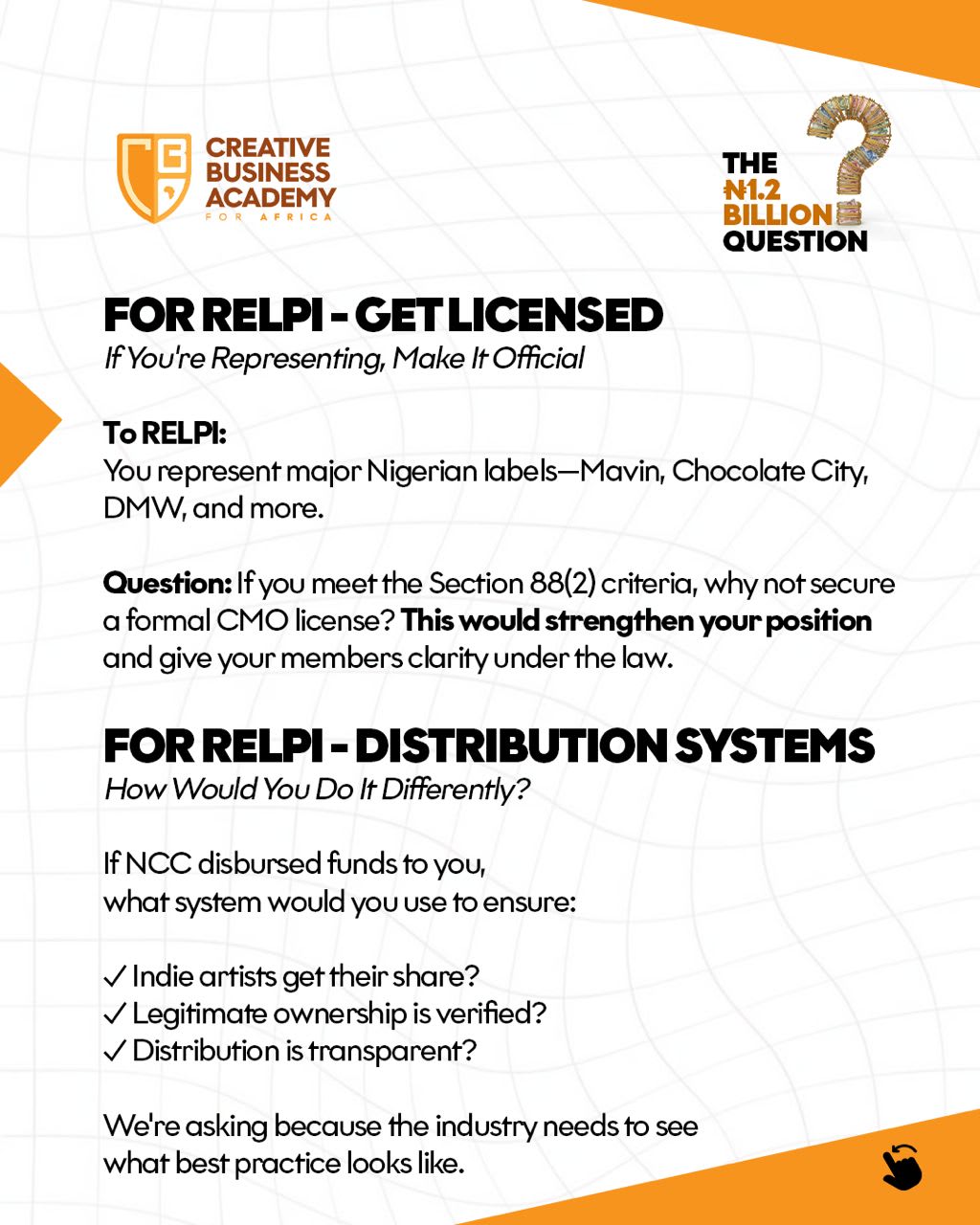
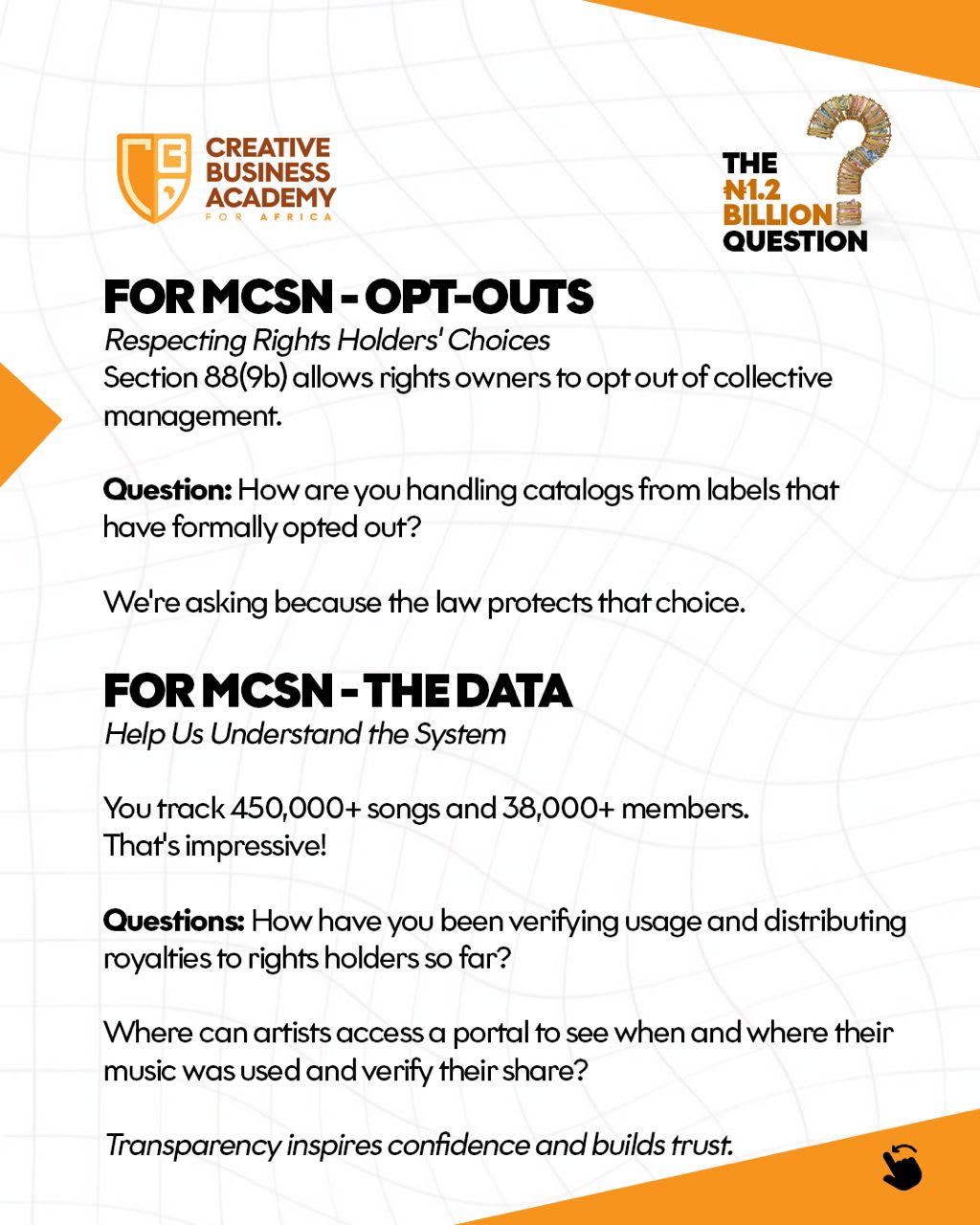
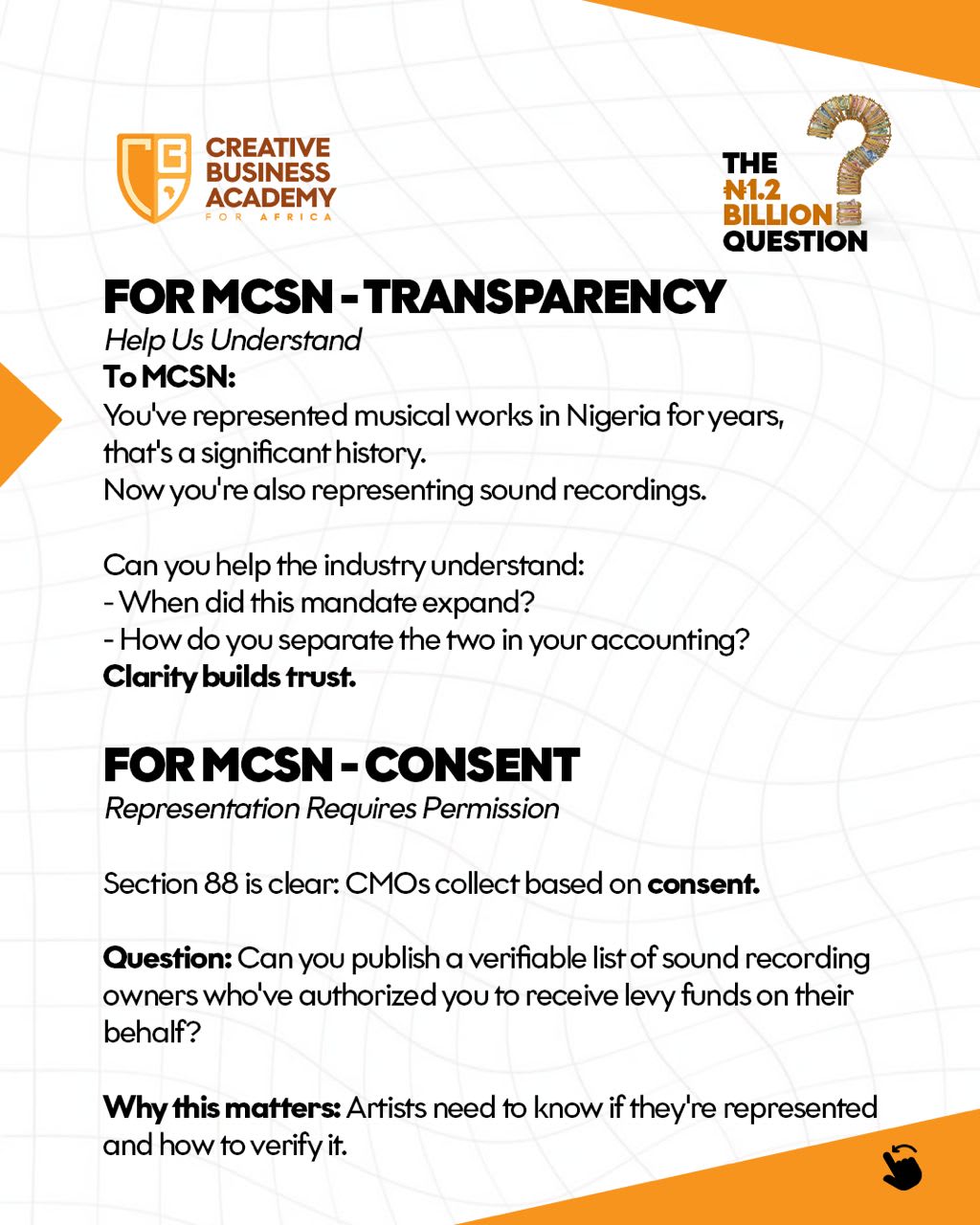
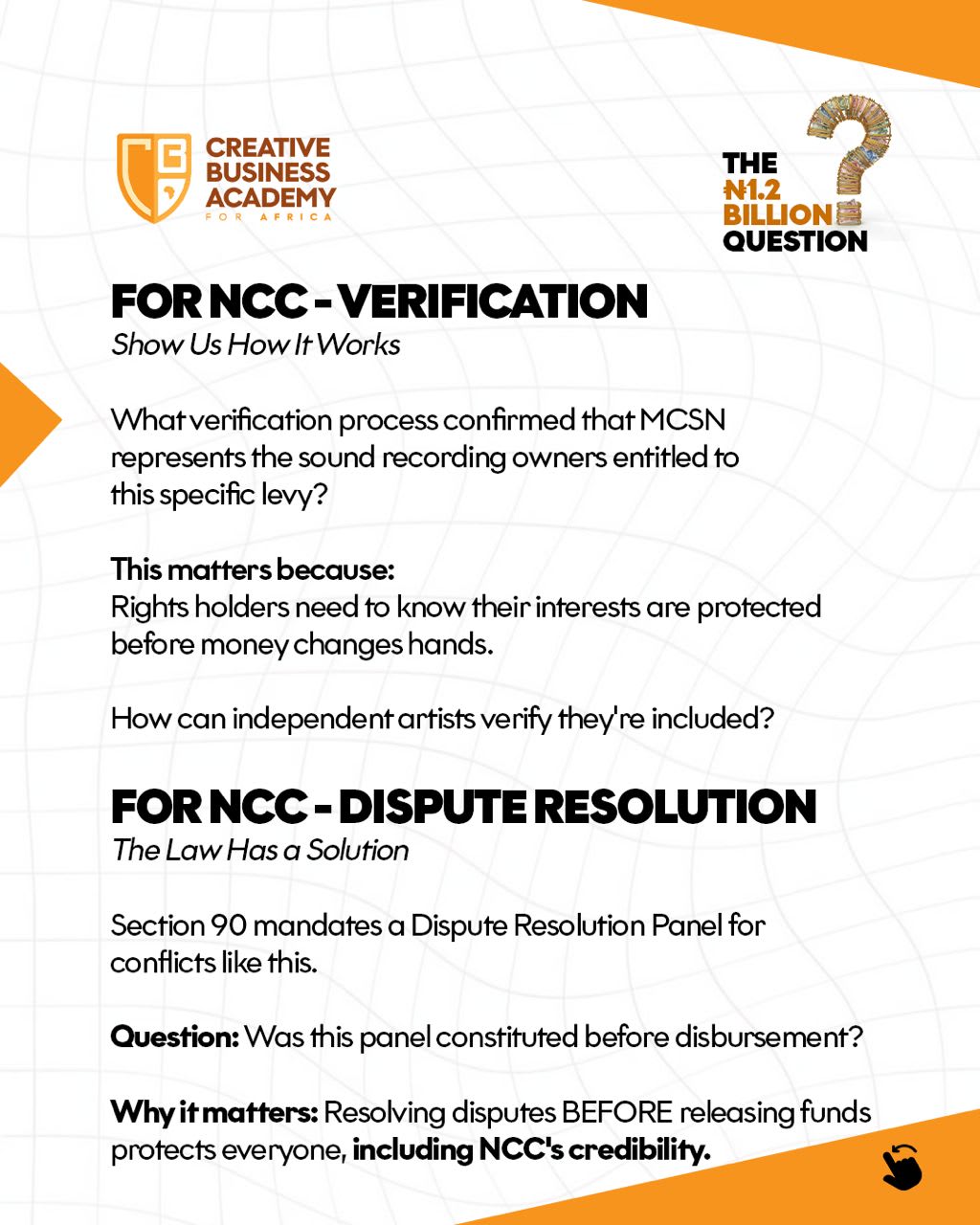
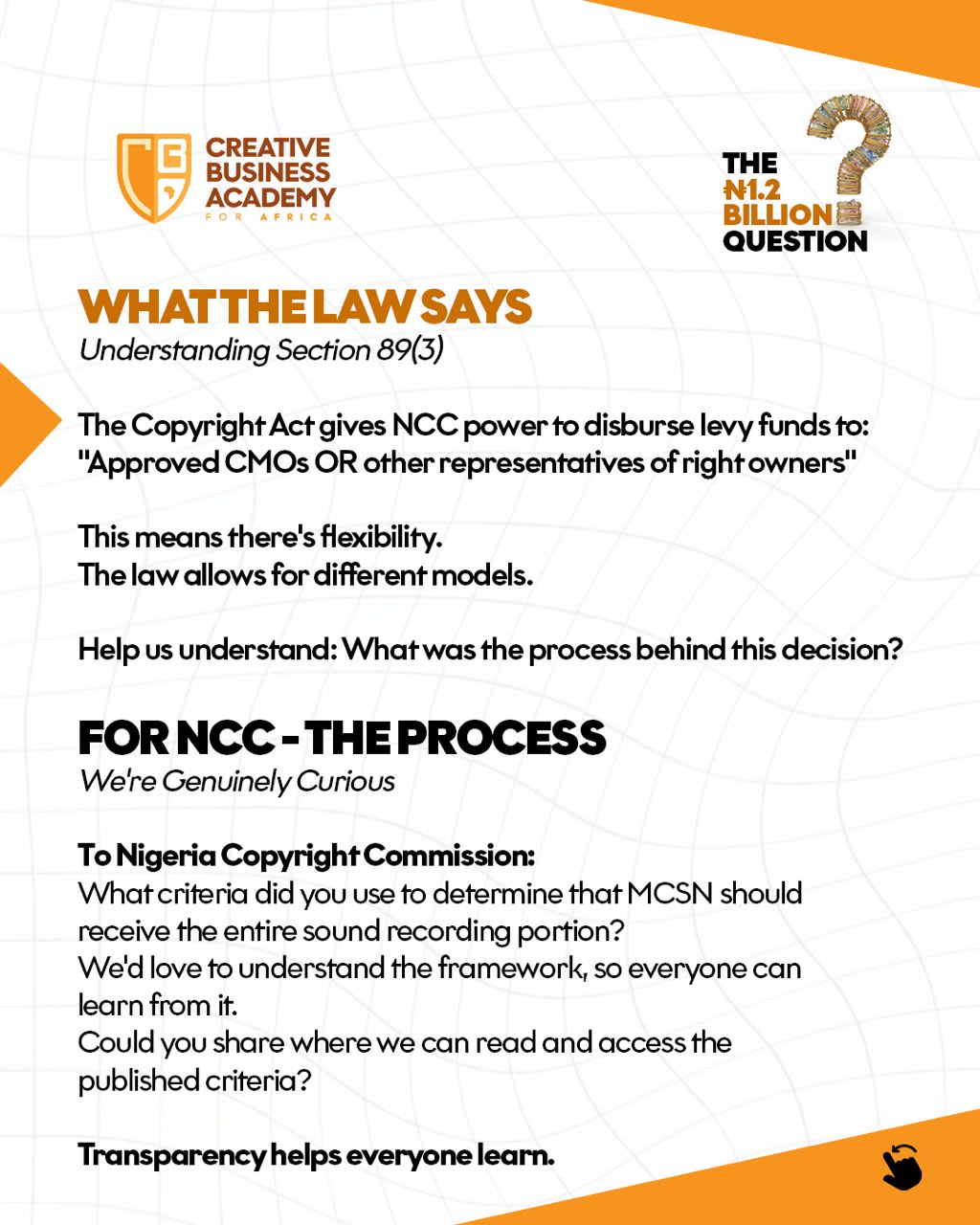
Image Slides from Creative Business Academy for Africa
The conversation around Nigerian copyright royalties has taken a new turn—and if you are an artist, producer, songwriter, or label executive, this is not just news.
This is your money.
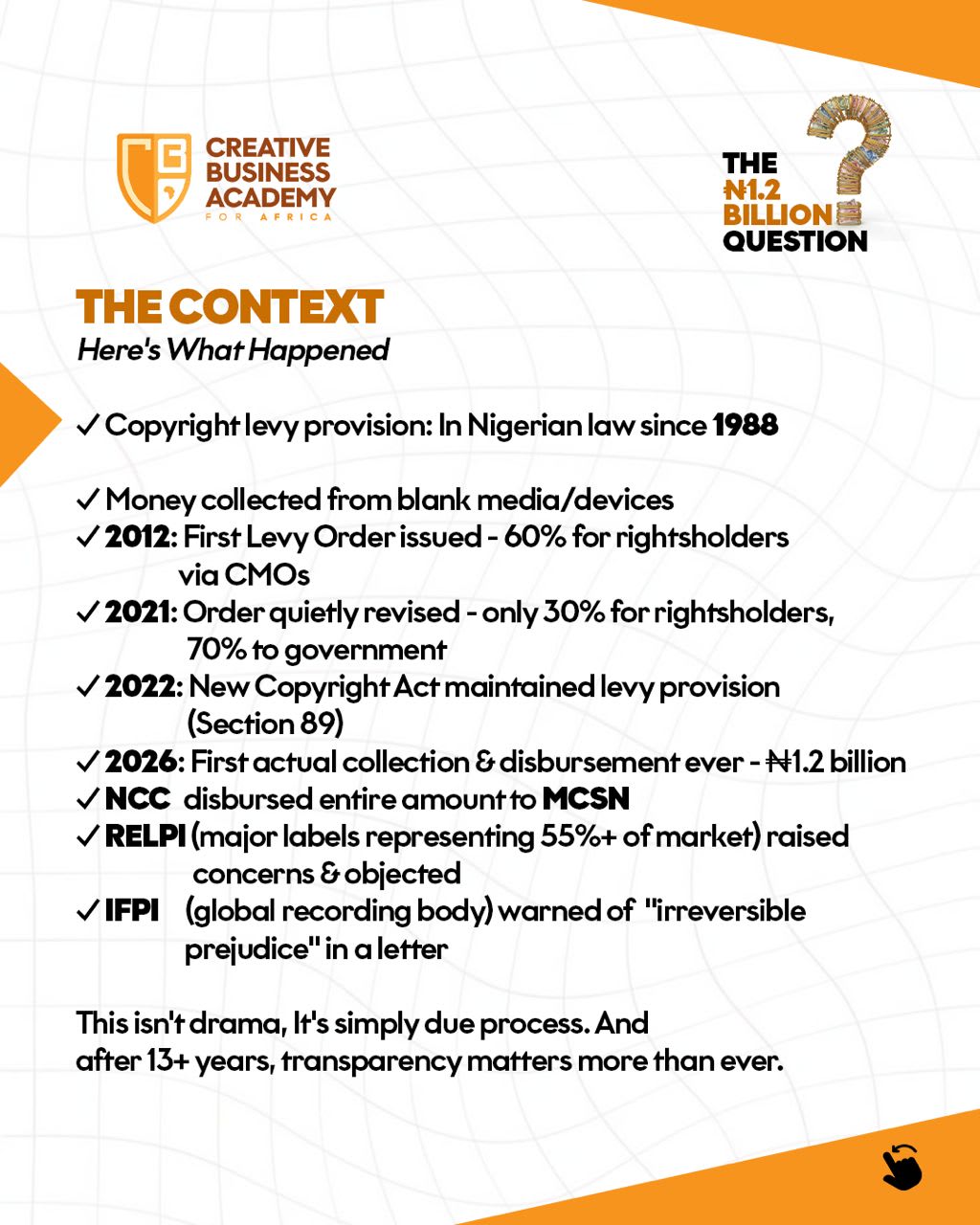
In 2026, ₦1.2 billion in copyright levy funds was released in Nigeria, raising serious questions across the African music industry about transparency, distribution, and creator rights.
But before we get into the controversy, here’s the context you need.
The Law That Was Meant to Protect Nigerian Creators
Back in 2022, Nigeria introduced a new framework through the Nigerian Copyright Commission under the Nigerian Copyright Act.
The goal was simple:
Protect creators
Ensure fair compensation
Build a structured royalty system
What Is a Copyright Levy (And Why It Exists)
A copyright levy is essentially a small fee collected from devices and media that can be used to copy creative work—things like storage devices, CDs, or digital tools.
Think of it as a “creative compensation system.”
Because your music, content, or intellectual property can be copied or shared indirectly, the levy exists to ensure you still earn from that usage.
In theory, it’s a system designed to protect creators at scale.
Where the ₦1.2 Billion Controversy Begins
Now to the issue.
The ₦1.2 billion recently released was reportedly paid out to a single body:
the Musical Copyright Society Nigeria.
This has raised concerns across the Nigerian music industry, with stakeholders questioning:
Why was the full amount given to one organization?
What was the selection process?
Where is the transparency in distribution?
Because here’s a simple way to understand it:
It’s like money meant for an entire estate being handed to one caretaker—without showing how each family member gets their share.
The Bigger Issue: Creators’ Share Has Dropped
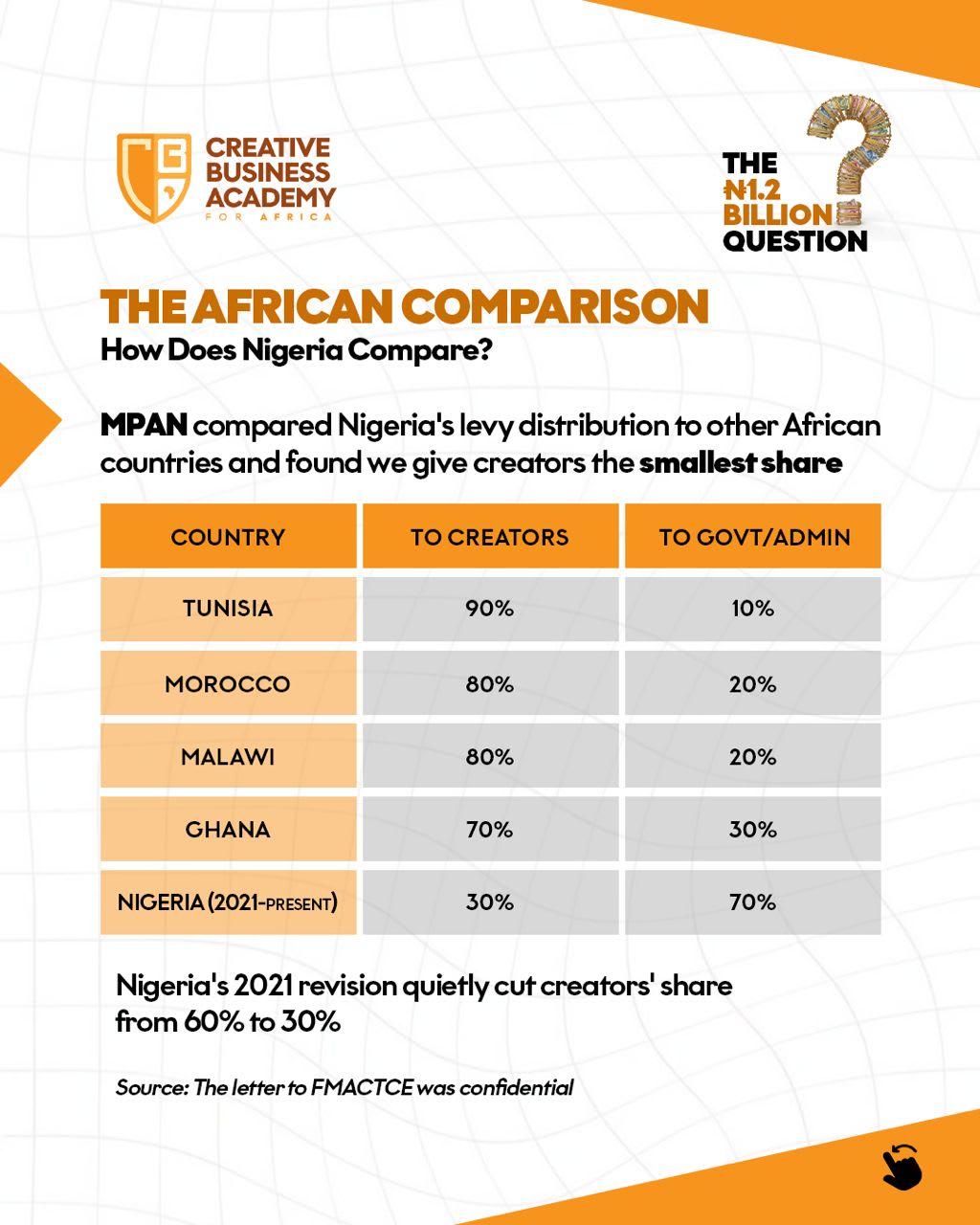
Originally, creators were expected to receive around 60% of these funds.
But after a policy revision, that share has reportedly dropped to 30%.
For Nigerian artists and music professionals, this raises a critical concern:
Is the system still working in your favor?
Because beyond the headline number, what matters is how much actually reaches the creators.
The Questions Every Nigerian Artist Should Be Asking
This situation highlights deeper issues within music royalties in Nigeria.
If you are part of the creative industry, you need answers to these questions:
Who is representing you?
Did you give them consent to collect on your behalf?
How can you verify your royalties?
Is there a system to track your earnings transparently?
Under copyright law, no organization should collect royalties for you without your permission.
And there should be clear systems for:
Ownership verification
Dispute resolution
Transparent distribution
This Is Bigger Than Industry Drama
It’s easy to dismiss conversations like this as industry politics.
But this is not just another headline in the African creative industry.
This is about:
Creator ownership
Fair compensation
Trust in the system
Because when systems lack transparency, the people most affected are often the creators themselves.
What This Means for the Future of African Creators
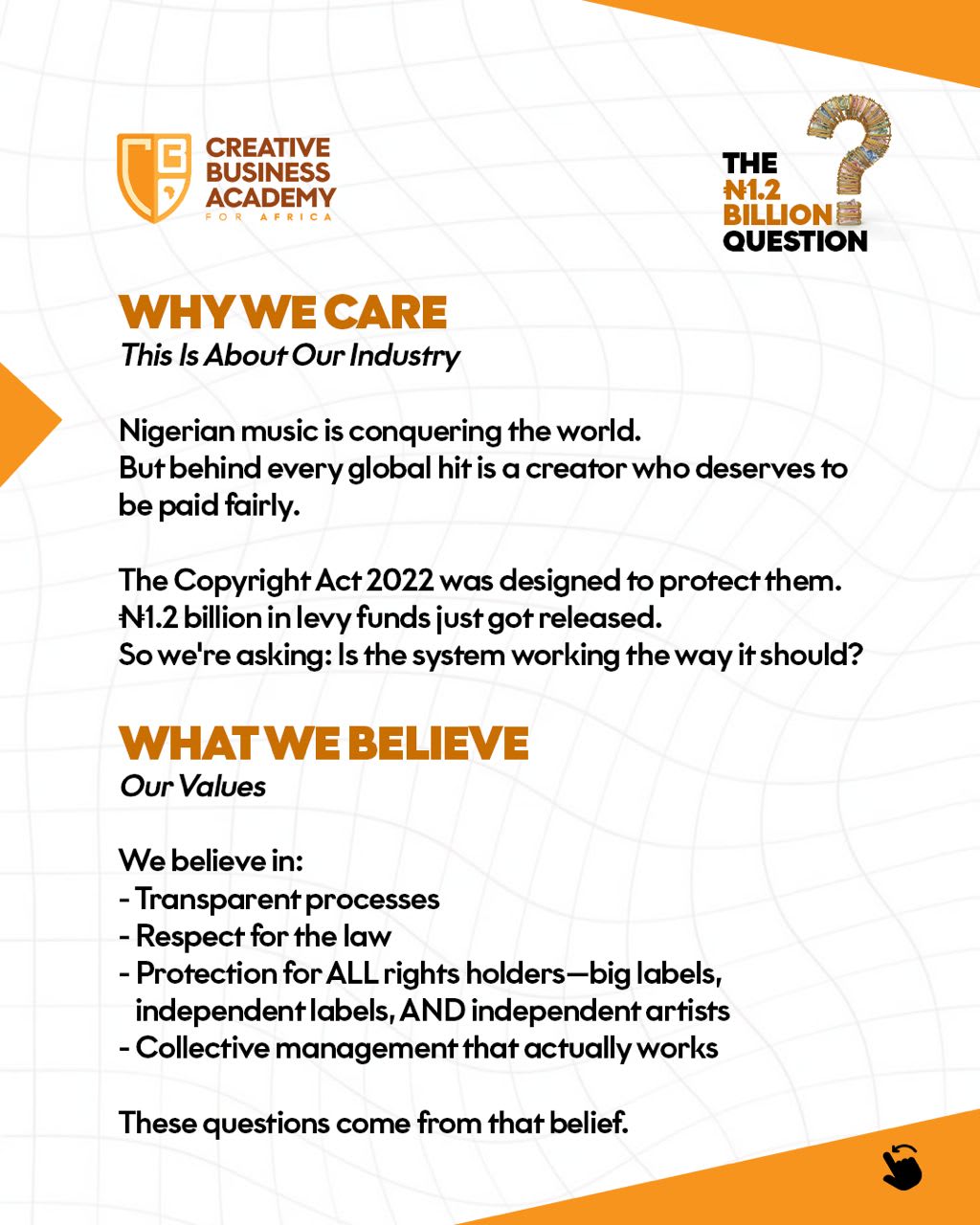
Africa’s music industry is growing globally.
Nigerian artists are exporting culture, building audiences, and generating billions in value.
But growth without structure creates risk.
For the African creator economy to thrive, systems like copyright royalties must be:
Transparent
Accountable
Creator-first
Because without that, the foundation becomes unstable.
What You Should Do Next
If you are an artist, producer, or music professional, this is your moment to stay informed and take action.
Ask questions
Demand clarity
Verify your rights
Because ₦1.2 billion is not small money.
And in a system like this, silence can cost you.
If you don’t ask—someone else will collect.
Read Also: Why African Creators Still Struggle to Monetize Their Work Online