

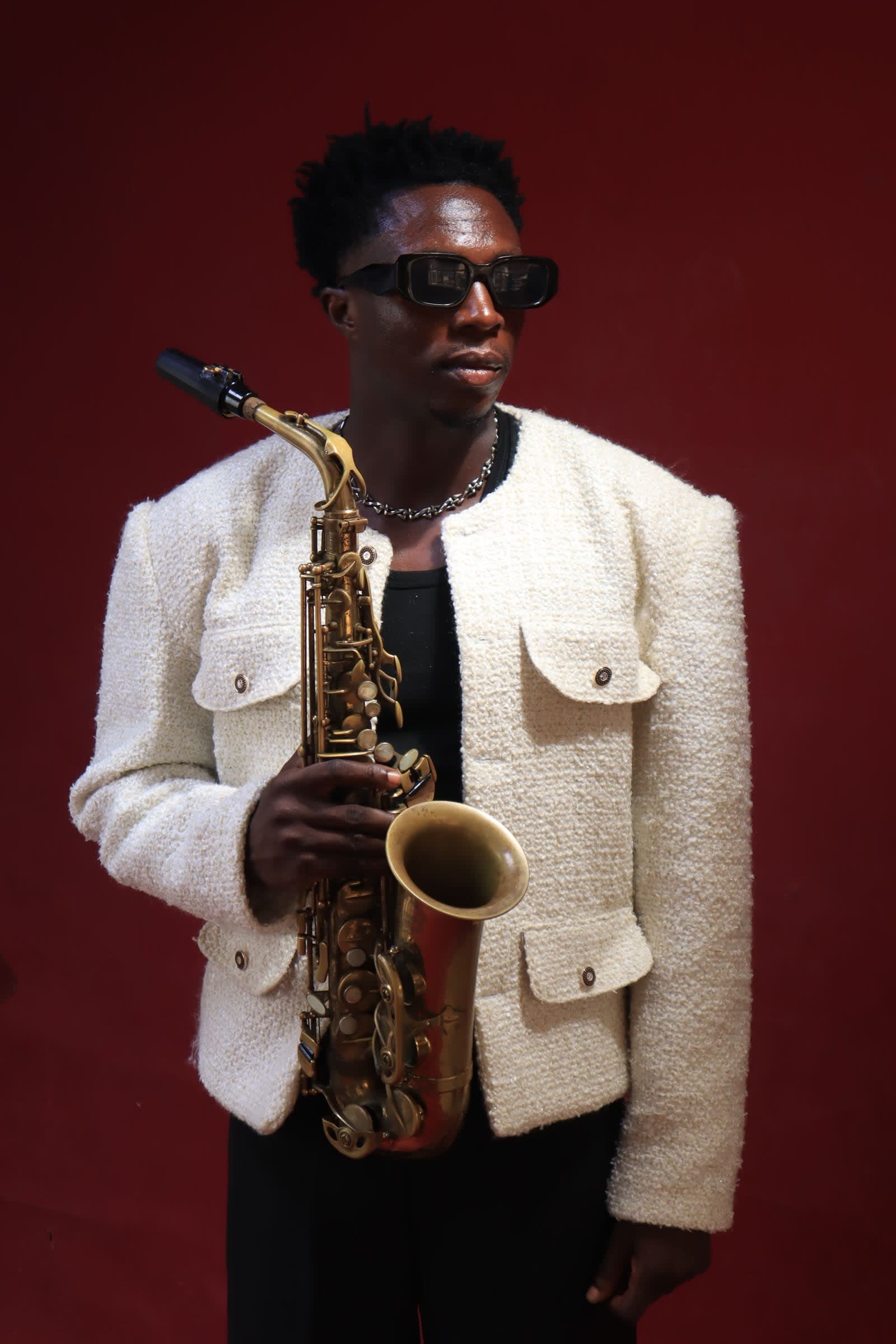
Meet Matt Sax, the composer and "carrier of sounds" who is moving the saxophone from the background to the absolute forefront of the African creative economy. Drawing from the rebellious spirits of Fela Kuti and John Coltrane, and guided by the mentorship of Jerry Omole, Matt Sax uses his instrument as a primary vehicle for storytelling. In this deep dive with EscapeMag, he discusses the architecture of sound, the discipline of "intentional phrasing," and how he translates complex African experiences into a global, instrumental language that demands to be heard.
EscapeMag: A lot of saxophonists disappear into the background of records. You’re trying to build an identity in front. What does it take to make the sax impossible to ignore in today’s soundscape?
Matt Sax: To make the saxophone impossible to ignore, you have to move past the idea of "fitting in" and instead focus on intentionality. It’s about deciding what specific role the instrument will play—whether it’s leading the melody, adding texture, or driving the rhythm—regardless of the genre. As a composer and a "carrier of sounds," your identity comes from using the instrument as a primary vehicle for expression rather than just a background layer. When you approach the sax as a fundamental part of the song's DNA from the writing stage, it stops being an accessory and becomes an essential voice that demands attention.
EscapeMag: There’s a difference between playing beautifully and saying something necessary. When you record, how do you know you’re not just making something that sounds good, but something that actually matters?
Matt Sax: Every song has two fundamental goals: to touch the soul and to deliver a message. As a composer, I recognize that my job isn't just to play what sounds "good" in a vacuum; it's to interpret the music based on what it truly demands. To play what the music needs, I have to be deeply artistic in my approach. It’s a process of listening first, then using my instrument to translate that specific emotional and narrative energy. It’s about intentionality over ego; I’m not just performing, I’m serving the spirit of the composition.
EscapeMag: Your influences range from Fela to Coltrane—two completely different philosophies of sound and rebellion. Where do you personally sit between discipline and disruption?
Matt Sax: I see myself standing at the intersection of modernism and heritage. Fela and Coltrane were masters of their own rebellions, and alongside the influence of my mentor, Jerry Omole, they’ve laid a foundation that I feel a deep responsibility to build upon. I don't choose between discipline and disruption; I use them as tools to push the music further than it’s gone before. My personal space is defined by using modern techniques and a contemporary approach to tell a purely African story. It’s about taking that raw, rebellious spirit and refining it through a modern lens so the message remains timeless but the sound feels brand new.
EscapeMag: You talk about telling African stories through instrumental music. Without lyrics, what are the tools you rely on to make sure the story is still understood and not just felt vaguely?
Matt Sax: Since I don’t use lyrics, I rely on the architecture of sound to build a narrative. I lean on three specific tools: First, Intentional Tone. Just as a speaker changes their voice to convey urgency or peace, I use the saxophone’s range—from a breathy whisper to a sharp, defiant roar—to act as the "vocals." Every note is a word, and every phrase is a sentence. Second, the Rhythmic Pulse. By blending the complex, polyrhythmic foundations of my African heritage with modern syncopation, I create a "setting" for the story. The rhythm tells the listener where we are—whether we are in a place of celebration, struggle, or reflection. Finally, Artistic Discipline. I use technical precision to ensure that the "message" isn't lost in translation. I interpret what the music needs to say to articulate specific African experiences: our resilience, our joy, and our modern identity.
EscapeMag: If someone listens to your music with no context, no name, no face; what should make them know that this could only have come from you?
Matt Sax: If you strip away the name and the face, what remains is a specific "MY SOUND." It’s a sound that sits right at the intersection of modern technical discipline and the raw, rhythmic pulse of an African story. You’d know it’s me because of the intentionality in the phrasing. I don’t just play what feels good; I play exactly what the music needs to reach the soul. It’s that unique balance of high-level artistry and deep spiritual narrative that makes my sound impossible to mistake for anyone else's. MY SOUND IS MY IDENTITY.
FULL FEATURE IN ESCAPEMAG 14
Industry Spotlight: The Evolution of Instrumental Music
Matt Sax’s approach highlights a significant shift in the African creative economy, where instrumentalists are transitioning from session players to solo creative entrepreneurs.
The Lead Instrumentalist: Traditionally, the music industry positioned vocalists as the sole "stars." However, data from Spotify Africa and Apple Music indicates a 15% rise in the consumption of African instrumental jazz and "Afro-Fusion" instrumental tracks globally, as listeners seek more diverse soundscapes.
Cultural Preservation: By blending polyrhythmic African foundations with modern syncopation, artists like Matt Sax are preserving cultural heritage while staying competitive in the global streaming market.
Sonic Branding: The concept of "My Sound is My Identity" is a form of sonic branding that allows instrumentalists to build high-value digital platforms, independent of traditional lyric-based constraints.
Sources:
UNESCO: Reports on the "Orange Economy" and the role of cultural heritage in modern African music.
Turntable Charts: Trends in non-vocal music performance across West African radio and digital platforms.
International Journal of Music Business Research: Studies on the professionalization of session musicians into solo brands within emerging markets.