

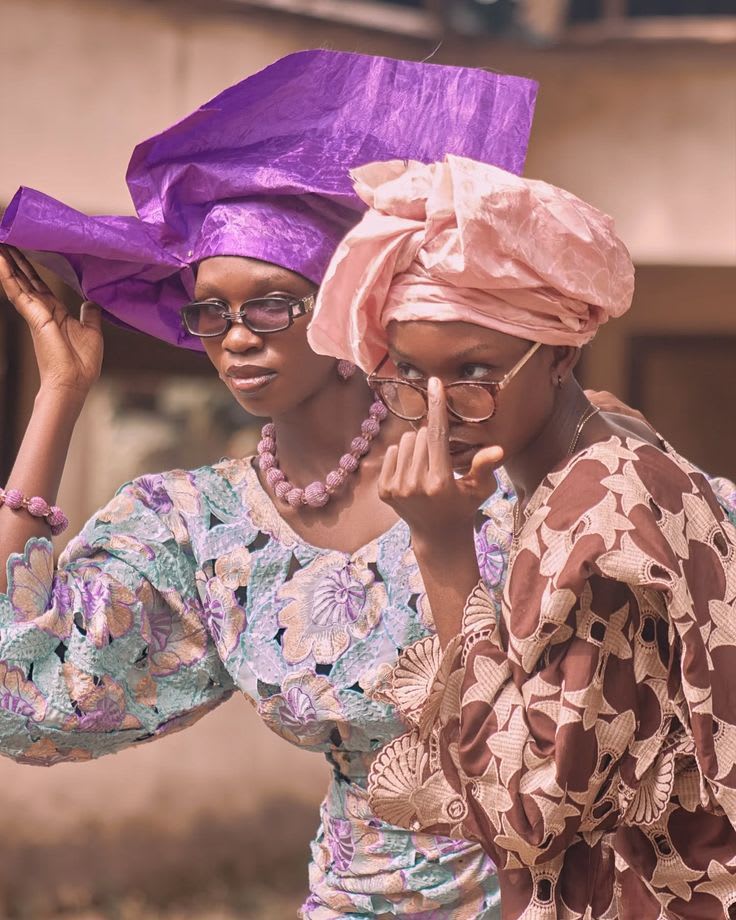
First, What Is the Gèlè?
The gèlè is a Yoruba woman's headtie, traditionally made from stiff, woven aso-oke fabric. But to call it just a headtie is like calling a crown just a hat. For generations, the gèlè functioned as a full social language. The height of the tier communicated status. The fabric communicated wealth. The colour communicated the occasion — deep burgundy and gold for a wedding, white for a funeral, the coordinated hues of an aso-ebi group announcing solidarity and belonging. A woman arriving at a ceremony in a properly tied gèlè communicated she was ready for anything and everything the social function demanded.
Crucially, the gèlè belonged to specific life stages. It was the headgear of married women, of mothers, of women who had arrived — socially, spiritually, domestically. A young girl did not simply wake up and throw on a gèlè for fun. It was earned through context, through occasion, through time.
That context is exactly what is being gleefully dismantled right now, Nigerian Gen Z women right now. And honestly? As a cultural observer it's fascinating to watch.
The Ayra Starr vs. Fimi Debate
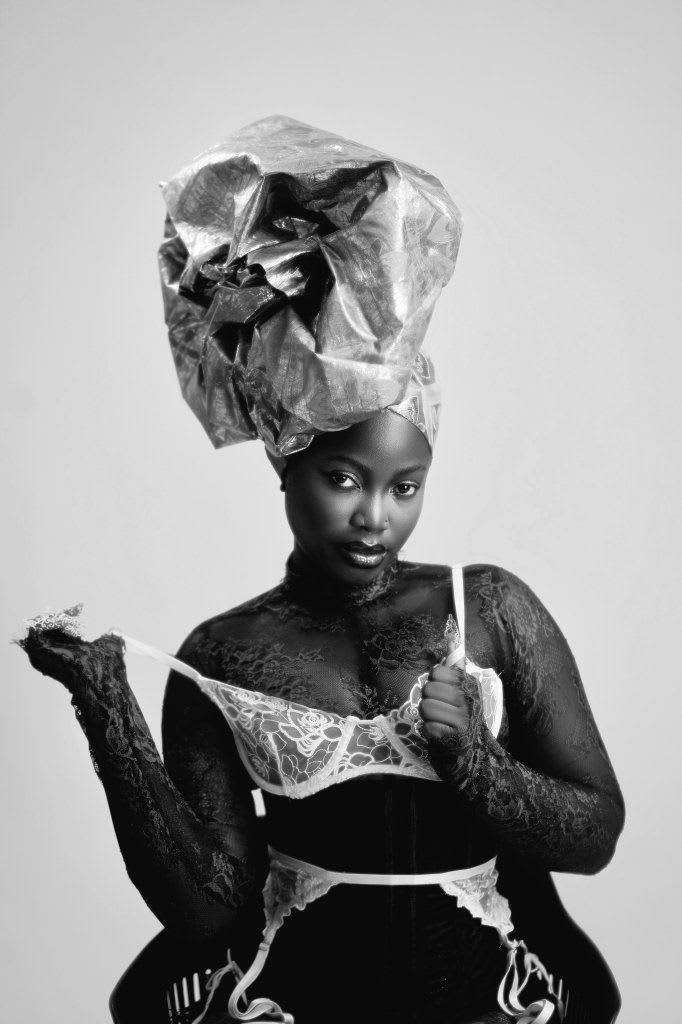
Let's address the TwitterX skirmish directly, because it reveals something important about where we are culturally.
The debate — which artist "pioneered" pairing the gèlè with alternative, non-traditional fits — is a credit argument. Fans want their fave to hold the originator crown. And in the attention economy, being first matters; it is the difference between being a trendsetter and being a follower, and that distinction influences real-time relevance in our brutal attention economy.
But the Ayra Starr vs. Fimi debate, which is primarily instigated by fans, holds little to no weight. Because neither of their faves invented the gèlè aesthetic. So what are we talking about exactly?
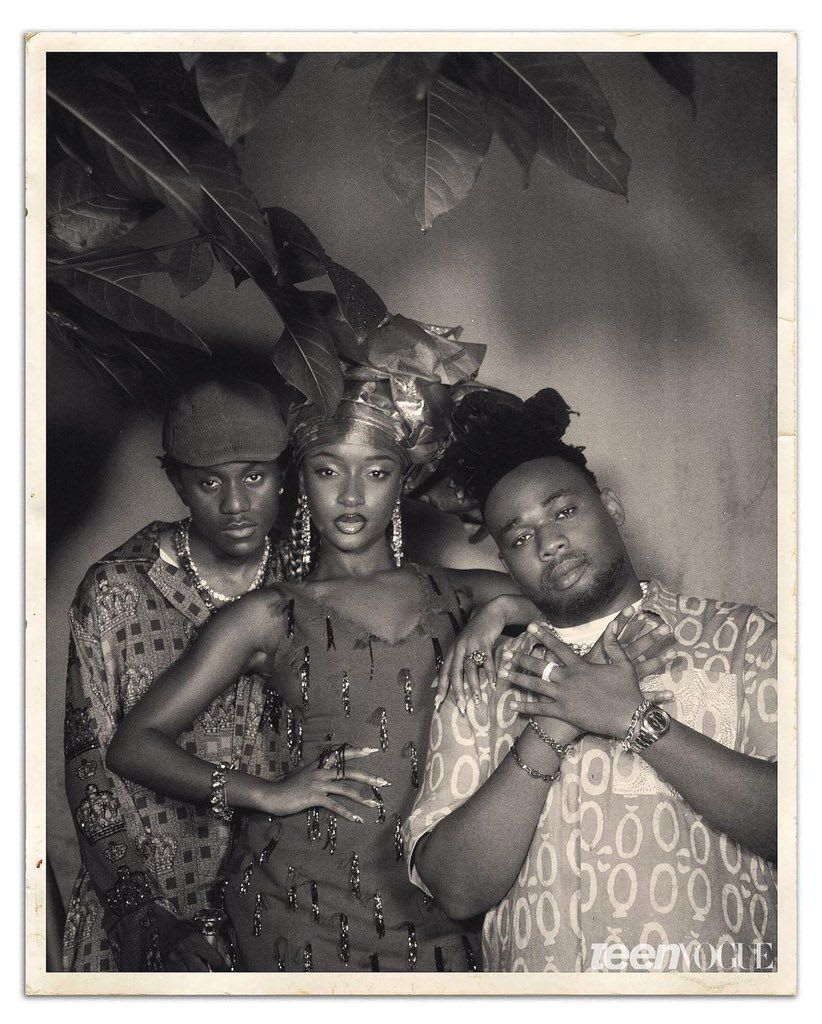
In July 2023, for Teen Vogue’s"Africa's New Wave" issue Ayra Starr, BNXN, and Victony were the cover stars. The special feature highlighted the global cultural influence of Africa’s youth and showcased the next generation of artists reshaping the Afrobeats genre. For Ayra Starr's main outfit, Ayra Starr’s team allegedly incorporated the gèlè into her Sabi Girl aesthetic for that album era she was in. And if anything more wanted to blend in Ayra Starr’s Yoruba heritage with her usual IT girl persona. And it stuck. Across eras, red carpet looks, live performances as seen at the ZSONGO x KOKO concert in London. and lately on the cover of her newest album, STAR GIRL. That purple gèlè is unmissable.
Yes, Ayra Starr has made the Yoruba gèlè a signature piece for her current era, but does that mean she owns it. And that any other female artist who ties a gèlè in any creative or promotional context is a wannabe and deserves to be cancelled for it. Come on.
Ayra Starr and Fimi fans have made it visible enough to argue about. The gèlè on alternative fits has been featured in pro-Yoruba fashion lines, Pinterest moodboards, African micro-influencers, and on diaspora women experimenting with identity for longer than either fan base would like to admit.
The more interesting question isn't which artist wore the gèlè first. It's why now. Why has this particular remix of tradition and modernity become a cultural talking point this writer is having to write a 2000-word think piece on?
How the Baddiefication Happened
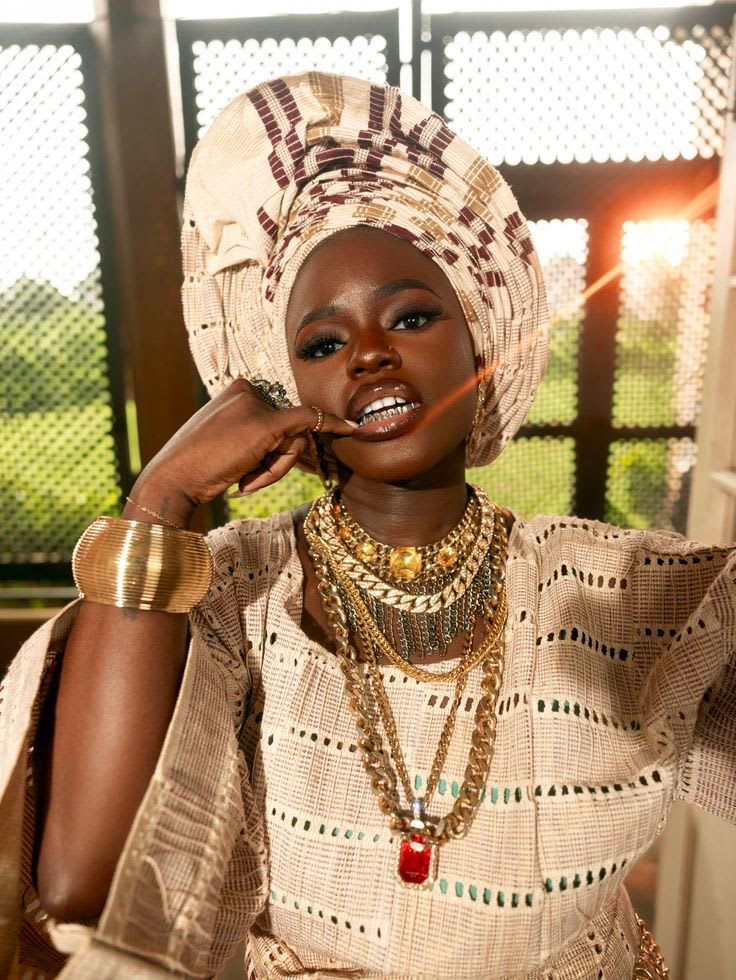
The "baddie" aesthetic is the visual archetype of the immaculately constructed woman. Contoured, snatched, attractive for the male gaze. The baddie is always camera-ready. Born on early Instagram, the baddie possesses beauty, power, and self-presentation as content in the social media era.
Nigerian pop culture has had its own long and productive relationship with this aesthetic — Afrobeats music videos, Nollywood glamour, the Lagos "it girl". But for a long time, traditional elements like the gèlè sat in a separate category. They belonged to your mother's world, your aunties' world. Not in a Baddie’s wardrobe until…Afrobeats went global and brought a hunger for Nigerian cultural specificity with it. The world wanted music, and every piece of aesthetic Nigeria had to offer. And that global appetite subtly created permission, both for Nigerians at home and in the diaspora, to embrace what was distinctly ours rather than dismiss it.
"Aunty core" and the reclamation of African grandma aesthetics became a broader fashion conversation. Globally, there was a movement of Gen Z women reaching back into their grandmothers' wardrobes and finding something powerful there. In the Yoruba context, this meant the gèlè, the iro and buba, the whole visual vocabulary of the older generation — suddenly reappraised as not dowdy, but iconic.
Social media made the gèlè tier content. The professional gèlè tier — once a woman at a ceremony, skilled but uncelebrated — became an Instagram profession. Get-ready-with-me videos, time-lapse ties, "gèlè stylist" as a legitimate hustle. The craft became visible in a new way, and visibility breeds aspiration.
Put all of this together, and you get the moment we're in: a generation of young Yoruba women who are not waiting for a wedding to wear a gèlè, and who are pairing it with corsets, mini skirts, streetwear, and everything in between.
What's Being Gained
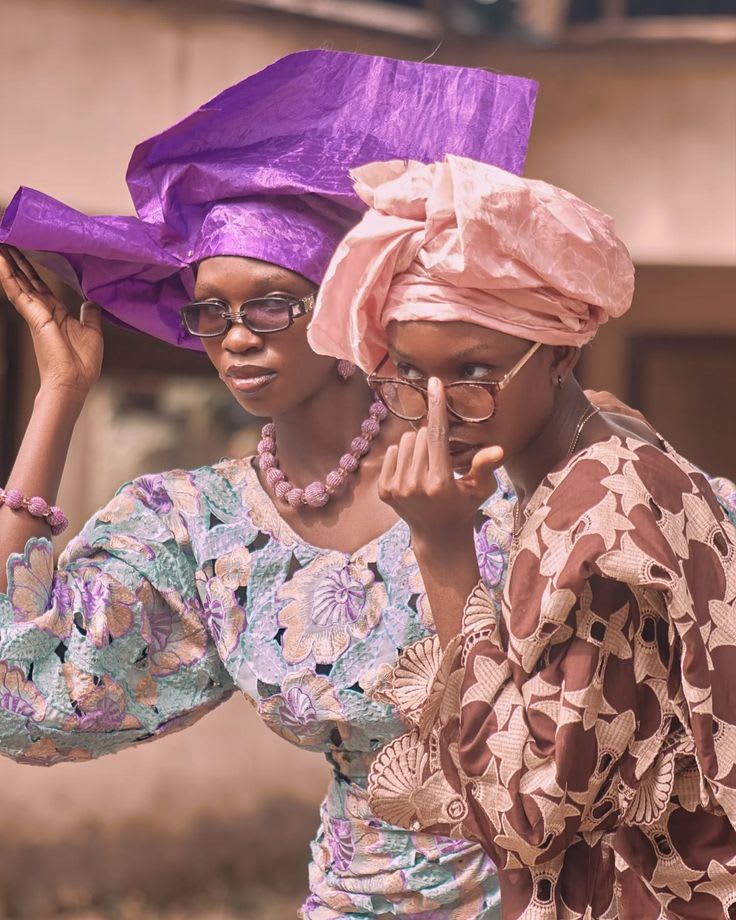
Let's be clear: there is genuine beauty and power in what's happening here.
The gèlè on alternative fits is, at its most radical, a refusal of the either/or that colonial modernity tried to impose on African women — the idea that tradition and contemporaneity are opposites, that you must choose between your grandmother's world and the current one. Wearing a perfectly tied gèlè over a mesh top or a leather bodysuit says: these things coexist in me. I contain both. Deal with it. It is an act of inheritance on their own terms, outside the traditional timeline of marriage and maturity. It says: I do not need to wait for life to authorise me to wear my culture. And the craft is seriously thriving. Gèlè tying is having a renaissance. Young women are learning it. Professionals are building businesses around it. That is cultural preservation in disguise.
What's Being Lost (Or at Least, Risked)
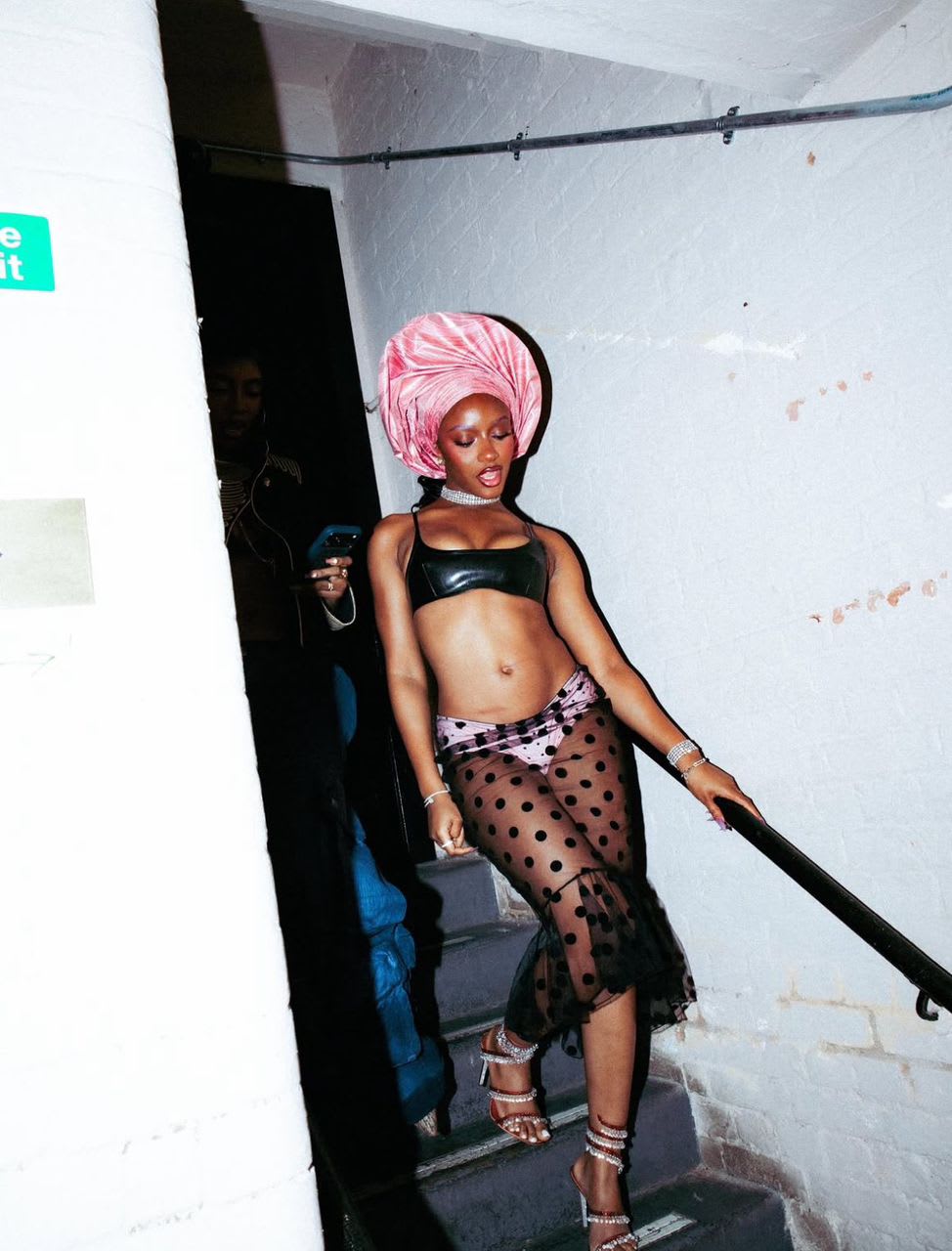
The baddie aesthetic is individualist. It centres the self, the image, the personal brand. The gèlè, historically, was a relational object. You wore it to show up for someone else — for a bride, a new mother, a family making a transition. The occasion gave it meaning. The community around you, dressed in the same fabric that was the point.
When the gèlè migrates fully into the content frame, it risks being divorced from that relational weight. It becomes something you wear for the camera rather than for the people. That is not a small shift. The gèlè was never just a beautiful object. It was a technology of showing up. What happens when that aspect of gèlè culture is lost? I honestly don't know.
There is also the question of what "baddiefication" does to the body politics of the gèlè. The traditional aesthetic was more capacious — it made the large woman magnificent, the older woman regal, the simply dressed woman dignified. The baddie aesthetic narrows. It has preferred female body types and preferred kinds of beauty. If the gèlè gets absorbed into conventional beauty standards, something of its democratic appeal can be eroded.
The Real Pioneer Question
Back to Ayra Starr and Fimi. Regardless of who wore what first, there is a generation that is comfortable holding the gèlè lightly. Not reverently, not apologetically, but lightly — the way you hold something that actually belongs to you. They are not wearing it to prove cultural credentials. They are not wearing it as a costume or in irony. They are wearing it because it's theirs and they think it looks good, and they want to.
Whether that's liberation or dilution probably depends on who you ask. Your grandmother has one answer. Your 22-year-old cousin with the gèlè-and-biker-shorts lewk has another. They might both be right.
So, Where Does This Leave Us?
The gèlè is not going anywhere. It is too embedded, too beloved, too significant in Yoruba culture to be undone by a fashion moment — even a very loud one. But it is changing, and the change is worth documenting with clear eyes.
The baddiefication of the gèlè is, at its best, a love letter to the object. At its least thoughtful, it is an aesthetic strip-mining, taking the visual power of a tradition while discarding the communal values that gave it weight.
The women leading this moment — artists, stylists, content creators, the girl tying her own gèlè in a bathroom mirror at 23 — will determine which version of this story gets written. They are the ones with the fabric in their hands. Let them sha tie it well.