
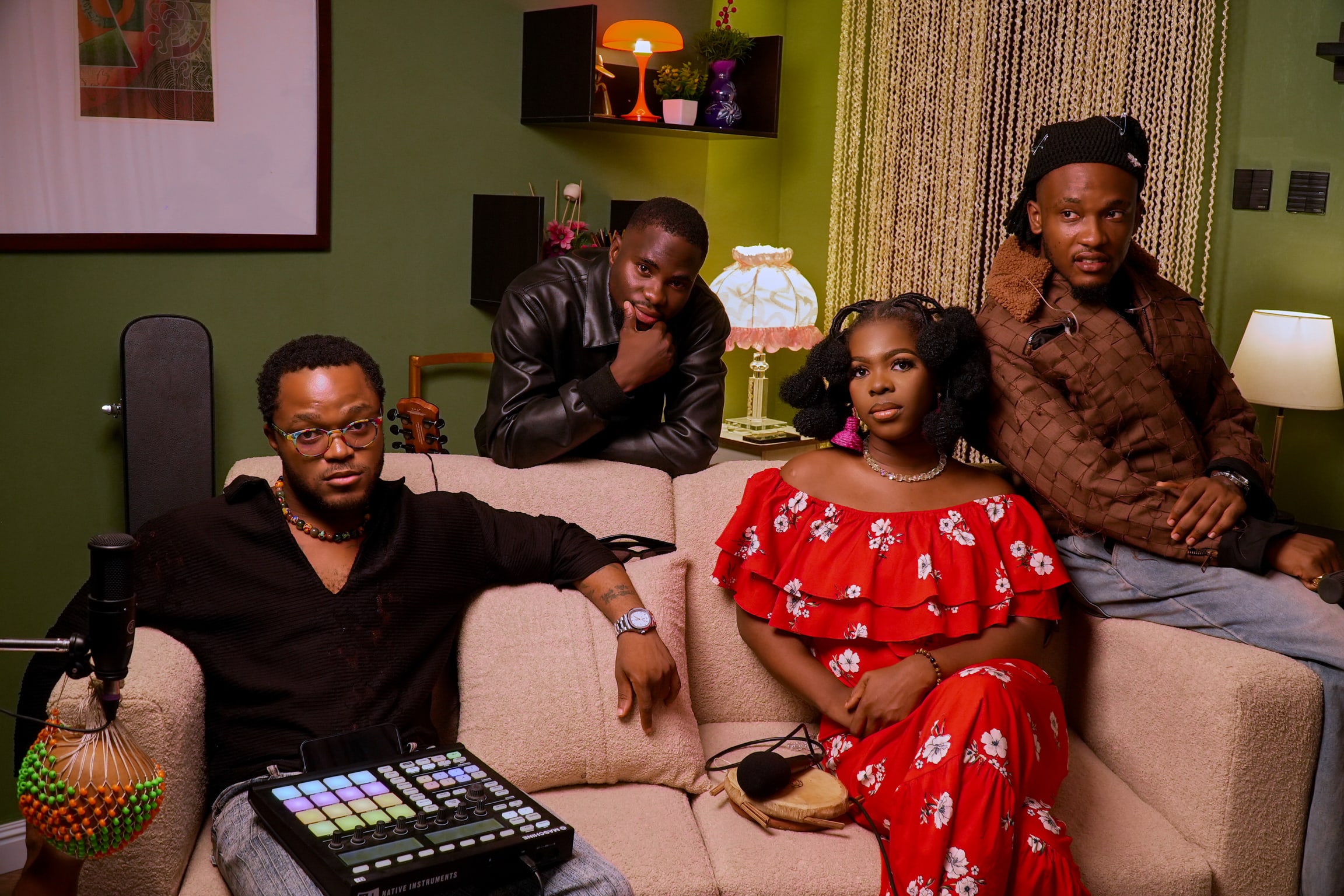
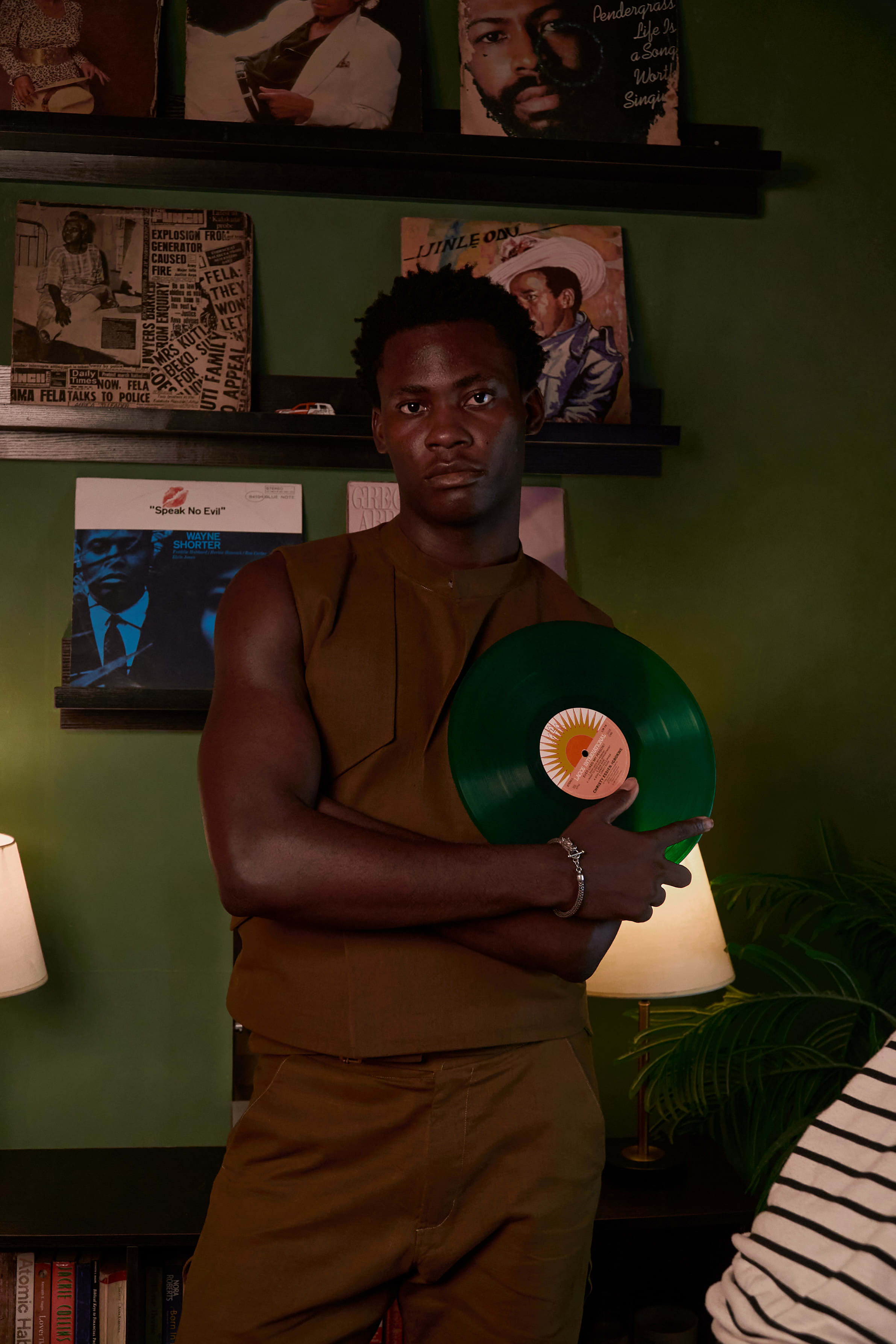

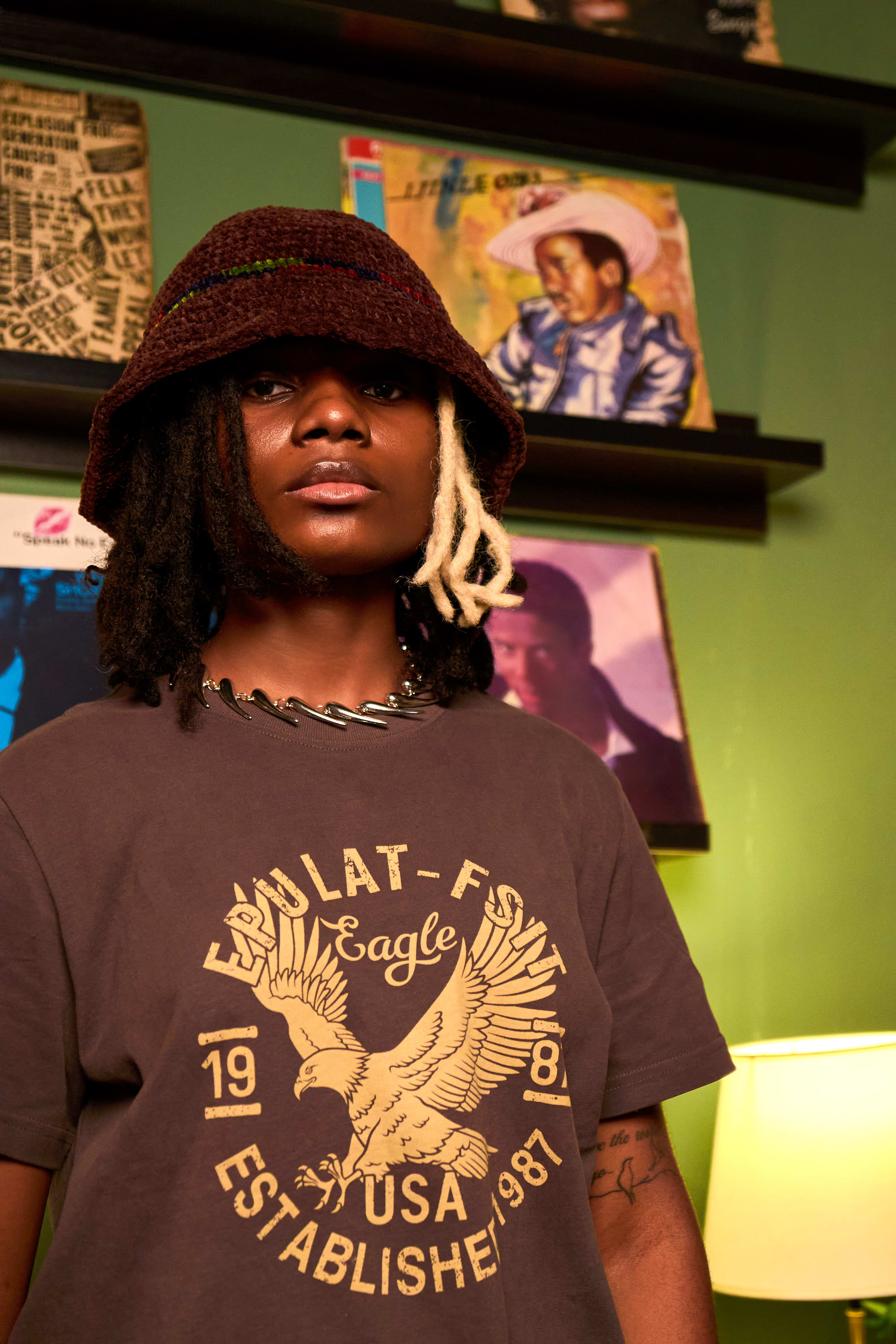
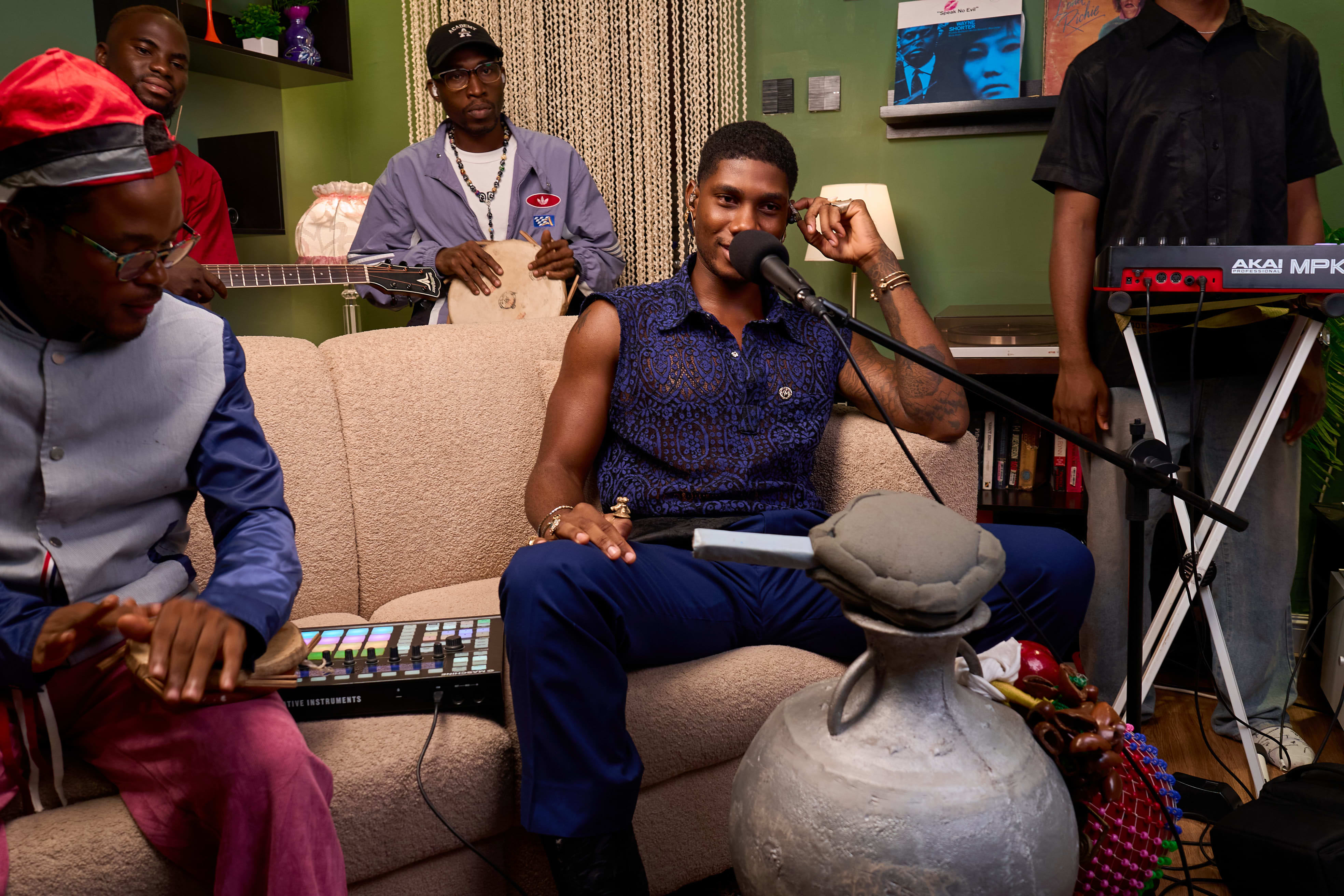
There is a room every Nigerian who grew up in the late nineties and early two thousands knows by heart. The parlour. The good cushions. The centre table you were not allowed to rest your feet on. The room where guests were received, where the family gathered, and where, on the best evenings, somebody sang. The Parlour Tapes has rebuilt that room on a full set, then done something quietly radical inside it. They let the music sit down.
We watched five sessions back to back. Kunmie. Jiire Smith. Salle. Priesst. Ema Onigah. The format barely changes because it never needs to. One musician on keys. One on drums and pads. One on guitar. The artist, seated, singing like the neighbours might knock. No smoke machines, no jump cuts, no theatrics. Just a set dressed like an actual Nigerian parlour, which somehow makes it more cinematic than most of the big budget videos fighting for your feed.
Something happens when a song is stripped this bare. You hear the crack in a voice right before the chorus. You catch the guitarist smiling at a lyric. You notice the small conversations happening between musicians who are really listening to each other. That texture is exactly what disappears inside a polished studio recording, and it is exactly the thing that turns a listener into a fan.
Here is the part we care about most. Every artist who has sat on that couch belongs to a new school of Nigerian music, artists with distinct sonic identities who have not waited for big media to co-sign them. That is the gap The Parlour Tapes is filling. Not a promo stop. A launchpad. A platform doing the work of putting people on before the machine notices them. Watch these sessions today and you are early. In three or four years, when these names sit at the top of the industry, this archive will be the proof that a small room saw them first.
Platforms like this are how a music culture remembers itself. We need more of them, and we need this one to keep going.
Start here: The Parlour Tapes, favourite sessions playlist
The Interview
Below is our full exchange with The Parlour Tapes team, answered by Lucas Olateju. Published exactly as received.
ESCAPE BLOG
A parlour is where Nigerian families receive guests. It is personal, it is intimate, and it says something about who you are. Take us back to the very first session you recorded. What did that room feel like, and what convinced you this needed to exist?
Response: The goal from day one was to create a sense of intimacy between artists and their fans. We wanted people to feel like they were sitting in the same room as the artist, experiencing the music in its purest form. There wasn't really anything like that on the continent, and we felt there was a gap that needed to be filled.
Our first session was magical. Seeing an idea we'd talked about for so long finally come to life felt surreal. The moment the artist started performing, we knew we had created something special.
ESCAPE BLOG
You have featured Magixx, Kunmie, Tar1q, Jiire Smith, Ema Onigah, Salle, and Priesst. When you are deciding who deserves a session, what are you listening for that streaming numbers cannot tell you?
Response: Streaming numbers have never been our benchmark. We look out for great music first. Beyond that, we're interested in artists with a distinct sonic identity, people who know who they are and have something genuine to say through their music.
We're drawn to artistry. Whether an artist has a million listeners or a thousand, if the music moves us and we believe they'll create an unforgettable performance, that's what matters. The Parlour Tapes has always been about celebrating artists for the quality of their craft, not just their popularity.
ESCAPE BLOG
A stripped down session hides nothing. No polish, no second take pretending to be a first. What have you watched happen to an artist in that room when the production falls away and it is just them and the song?
Response: One thing we've noticed is that artists become completely immersed in the music. Without all the distractions of a typical production, there's nowhere to hide, which is a beautiful thing. Their personality, musicianship and emotion naturally comes to the surface.
ESCAPE BLOG
You describe The Parlour Tapes as an archive. Years from now, when someone opens that archive, what do you want them to understand about this generation of Nigerian artists that the charts never showed?
Response: We want people to see that this generation of Nigerian artists was defined by far more than commercial success. Behind every hit record are incredible musicians, songwriters, storytellers and performers whose artistry deserves to be remembered.
The charts can tell you what was popular. Our archive is meant to show what these artists felt like in a room, how they connected with people, and the level of musicianship they brought to their craft. We want future generations to experience the humanity behind this era of African music, not just the numbers it produced.
ESCAPE BLOG
Live music culture in Nigeria has always existed, but platforms built to document it with this kind of care are new. What does The Parlour Tapes look like at full scale, and what has to stay the same no matter how big it gets?
Response: At full scale, we see The Parlour Tapes becoming Africa's home for intimate live music, a platform where the world's best artists, both emerging and established, come to tell their stories through performance. We want to build an archive that represents the richness and diversity of African music and introduces our artists to audiences around the world. Regardless of how much we grow, the intimacy will remain constant. The setting might evolve, the audience might get bigger, but the experience will always feel personal.
Answered by Lucas Olateju for The Parlour Tapes.