

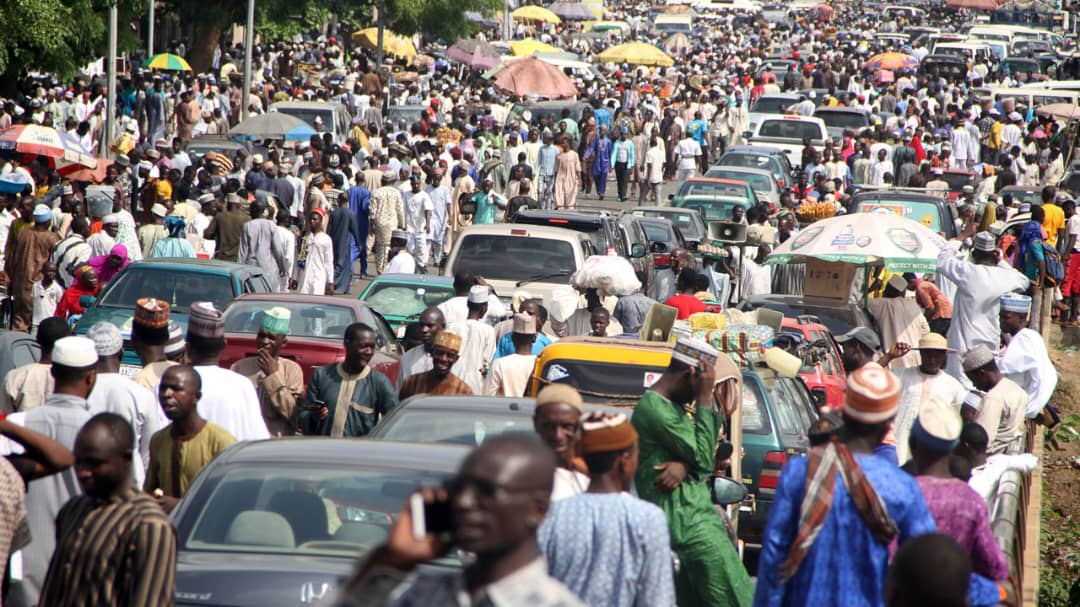
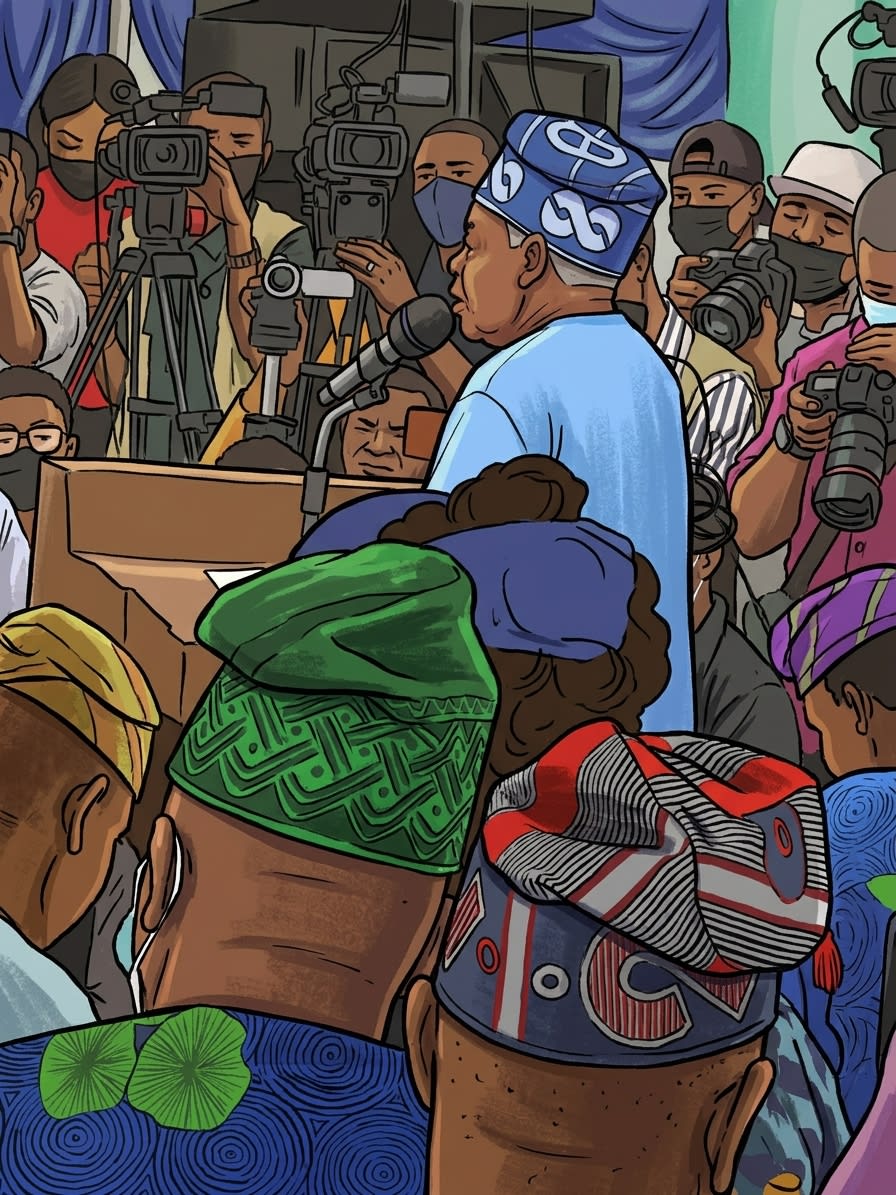

Too many heads bowed, a lot of them bowed for no other reason than the fact that society expects it. Bowing is a supposed show of respect in Nigerian society and it varies by tribe and class. I say supposed because the so-called respect we try to uphold as a society hasn’t been positively upheld, in fact it has become a means of exploitation and gaslighting from top to bottom.
The Nigerian society is plagued with the idea of respect and how it is apportioned. The elders demand it and the rich expect it, even amongst the less privileged you can see it. It's there, woven into the fabric of our society, our institutions - churches, mosques, government houses, private companies. On a university campus , you can find students calling their peers mummy or daddy because they are trying to convey respect to their supposed pastor / pastors.
The above is basically an intro to what I really want to talk about and I hope I do justice to it, which is subservience and the Nigerian society.
Subservience is the state or quality of being overly willing to obey other people, or treating one's own wishes, rights, and needs as less important than those of others.
I think there are a series of intertwined factors that led to the cause of our large subservient populace. My intro has pointed out two if it isn’t already obvious, which is our faux respectful ideology and how we practice religion. Two other major factors I believe contribute to this subservience is poverty and corruption, both are also intertwined.
When poverty dictates your daily survival and corruption governs the system, deference stops being a moral choice and becomes a bargaining chip to stay alive. In an environment where basic needs are uncertain and institutions fail to protect the vulnerable, bowing low is no longer about honoring someone’s genuine wisdom or character. It is simply about securing your daily bread, keeping your job, or staying out of harm's way. What we call respect in this country is often nothing more than fear dressed up in an ironed agbada or a clean suit.
In a society that worships money above almost everything else, this dynamic becomes even more grotesque when you look at how wealth shapes human interactions. The relationship between the rich and the less privileged in Nigeria is built almost entirely on enforced subservience. The big man or big madame expects to be treated not just with courtesy, but like a messiah or a saviour whose presence demands total deference. On the other side, the less privileged feel that by bowing, groveling, and shrinking themselves, they might catch a few crumbs or secure a life changing favor. When basic survival depends on the whims of the wealthy, genuine human connection is replaced by a transactional court where one party plays God and the other plays the desperate servant.
What makes this even harder to stomach is seeing how the political class has taken this subservience and turned it into an art form. This is one of the deepest reasons I hold such a strong aversion to the current ruling party, the APC, because their entire political machinery thrives on this very dynamic. Under their reign, compulsory deference has been cranked up to a frightening level. You see fully grown adults, seasoned politicians, and supposed business leaders wearing the Asiwaju cap not necessarily out of conviction, but as an explicit badge of submission to access favor. You watch lawmakers in the House of Assembly abandon their constitutional duty of oversight to break into choruses of "On Your Mandate We Shall Stand" inside legislative halls, bowing to a political patron rather than serving the people. You watch how agberoism has been institutionalized among Yoruba youth, where young men are turned into street enforcers and political foot soldiers, conditioned to defend a political structure that keeps them impoverished. It makes me sick to my stomach to witness these public displays, because it shows how deep the rot goes when a ruling party weaponizes societal subservience to consolidate power.
The most tragic part of this whole setup is that the very institution meant to liberate us from this mindset, our educational system, has become the primary factory producing it.
Schools are supposed to be places where a nation teaches its young population how to be human, how to think critically, and how they deserve to be treated by authority. Instead, the decay starts right from the foundation. In secondary schools across major urban centers, you routinely find students sitting on bare concrete floors, packed into classrooms without a single desk or chair. If this is what is happening right in the cities, you can only imagine the utter abandonment in rural areas where children are left to learn under collapsed roofs or open trees.
I remember back in my own secondary school days, there was a neighboring school undergoing renovations. Instead of putting up normal glass louvres, they replaced the windows with heavy steel plates. Even as a student then, that scene played repeatedly in my mind. The underlying logic was clear: the authorities were terrified that students would break glass louvres and use them as weapons during fights. Back then, we used to have bloody school versus school clashes, and one of those brawls was so intense that my school was shut down for three whole months. While student violence was real, the institutional response revealed everything about how we view young people. Rather than building environments that cultivate dignity, emotional regulation, and self-worth, our institutions design spaces like prisons, anticipating chaos rather than inspiring character. We treat students like wild animals to be contained, and then wonder why they grow up feeling like second class citizens in their own country. We can do so much better.
When you force young, impressionable human beings to spend their formative years in conditions designed around mistrust and hostility, you break down their self-worth before they even understand what basic rights mean. By the time they step into adulthood, they have been conditioned to accept bare minimum treatment from landlords, employers, and politicians without ever asking questions.
It gets worse as they move up into tertiary institutions. Universities, which ought to be spaces for big ideas and open intellectual debate, operate like feudal kingdoms. Lecturers and professors move around acting like mini Gods. You see grown university officials standing at campus gates physically cutting male students’ hair like unruly children, asserting dominance over personal autonomy simply because they hold power. Hostels look and feel worse than modern foreign prisons, yet students dare not speak up. The average Nigerian student is terrified to ask a lecturer a simple question, let alone challenge an outdated point in a lecture hall. Passing your courses usually depends on bowing low, buying self-published lecture packs without complaint, and making sure you never bruise a professor's fragile ego. We do not teach our young people to think, we teach them how to endure power.
This conditioning flows straight into our corporate spaces and workplaces. The modern Nigerian workplace often looks more like a royal court than a business driven by efficiency and results. Toxic leadership, unpaid overtime, and clear operational blunders go uncorrected because pointing out an Oga's mistake is immediately labeled as insubordination. We routinely sacrifice progress and clear thinking on the altar of bruised egos and titles.
The psychological toll this takes on us is massive. When an entire society is trained to swallow its rights, dignity erodes piece by piece. Subservience inevitably breeds a cycle of micro tyranny where the same person who bows servilely to their boss goes home or into the streets to demand absolute submission from their subordinates, younger relatives, or domestic workers. Oppression becomes a chain where everyone tries to extract from the person below them the dignity they were forced to surrender to the person above.
If we ever hope to break out of this, we have to start unlearning this posture. We must learn to separate genuine, reciprocal respect, which is earned through character, empathy, and integrity, from compulsory subservience, which is extracted through fear, money, and social coercion.
An elder, a lecturer, a spiritual leader, or a boss deserves common courtesy, but never at the expense of justice, truth, or basic human dignity. We need to stop mistaking a quiet, compliant population for a respectful nation. Until we realize that standing tall with your dignity intact is not an act of disrespect, we will keep bowing our way into collective decay.
On a final note, I often wonder if this deep seated subservience actually contributes to our loudness as a people. Maybe that outward volume is just a coping mechanism, a cover up to mask the silence we are forced to swallow when it matters most, a way to hide from the reality of our own compliance.
But perhaps that is a write up for another day.