

I was only 9 during the 2010 World Cup. Still, I remember everything. Fourteen years later, it remains my favourite and, arguably, one of the best World Cup editions ever hosted. Aside from the games, players, and tournament drama, one element that carried the 2010 World Cup was the music — Waving Flag and Waka Waka. These songs were so grand that they elevated every World Cup that followed and set a standard: every World Cup must have a signature anthem attached to it. However, after three more World Cups, 2014, 2018, and 2022, none of them has been able to replicate what Waka Waka and Waving Flag made a generation feel.
Watch Waka Waka
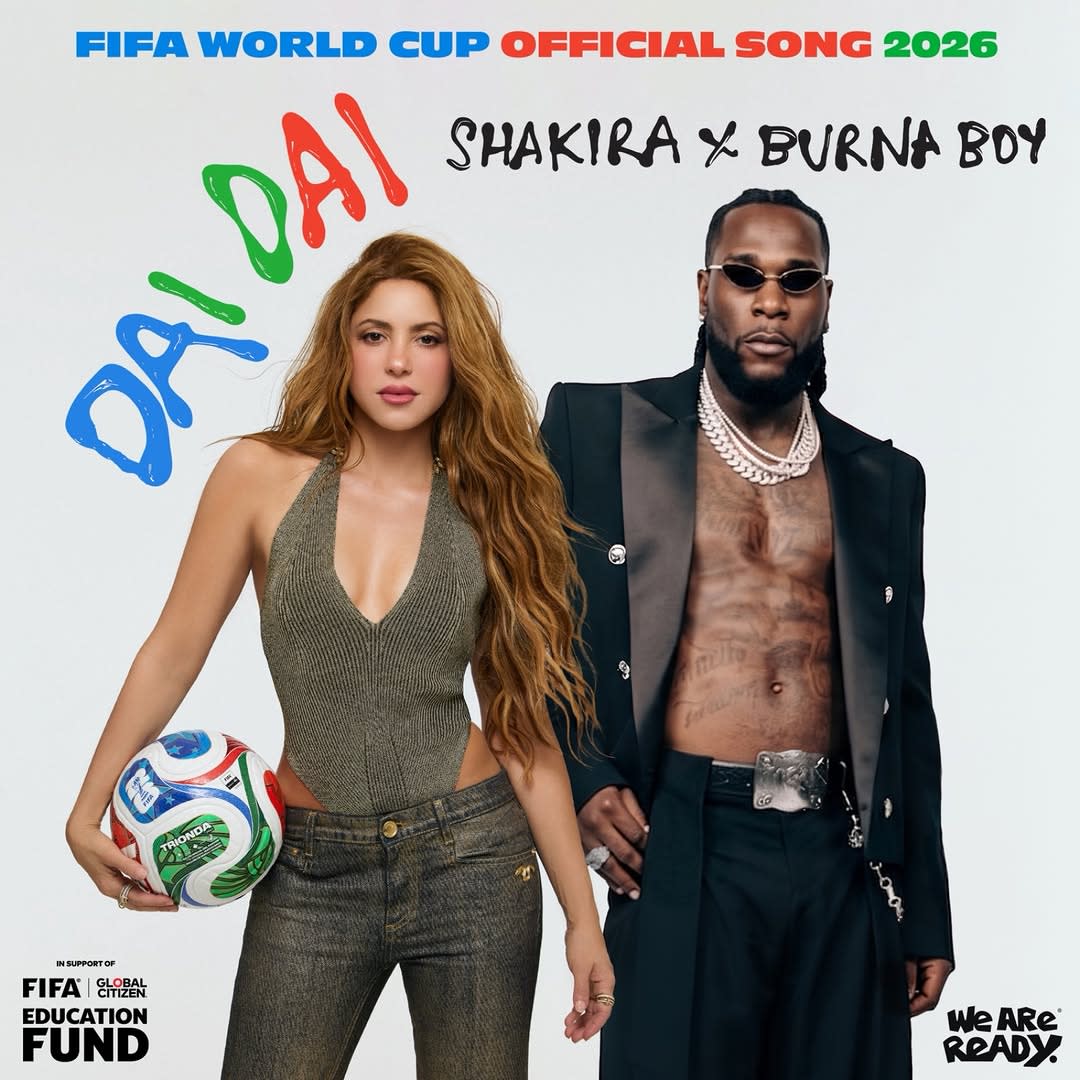
Fast forward to 2026. Shakira, the performer of Waka Waka, was tapped alongside Africa's biggest musical acts, Burna Boy, to create something similar yet distinct, for that same generation and the younger ones who grew up hearing Waving Flag and Waka Waka. So, how is that going?
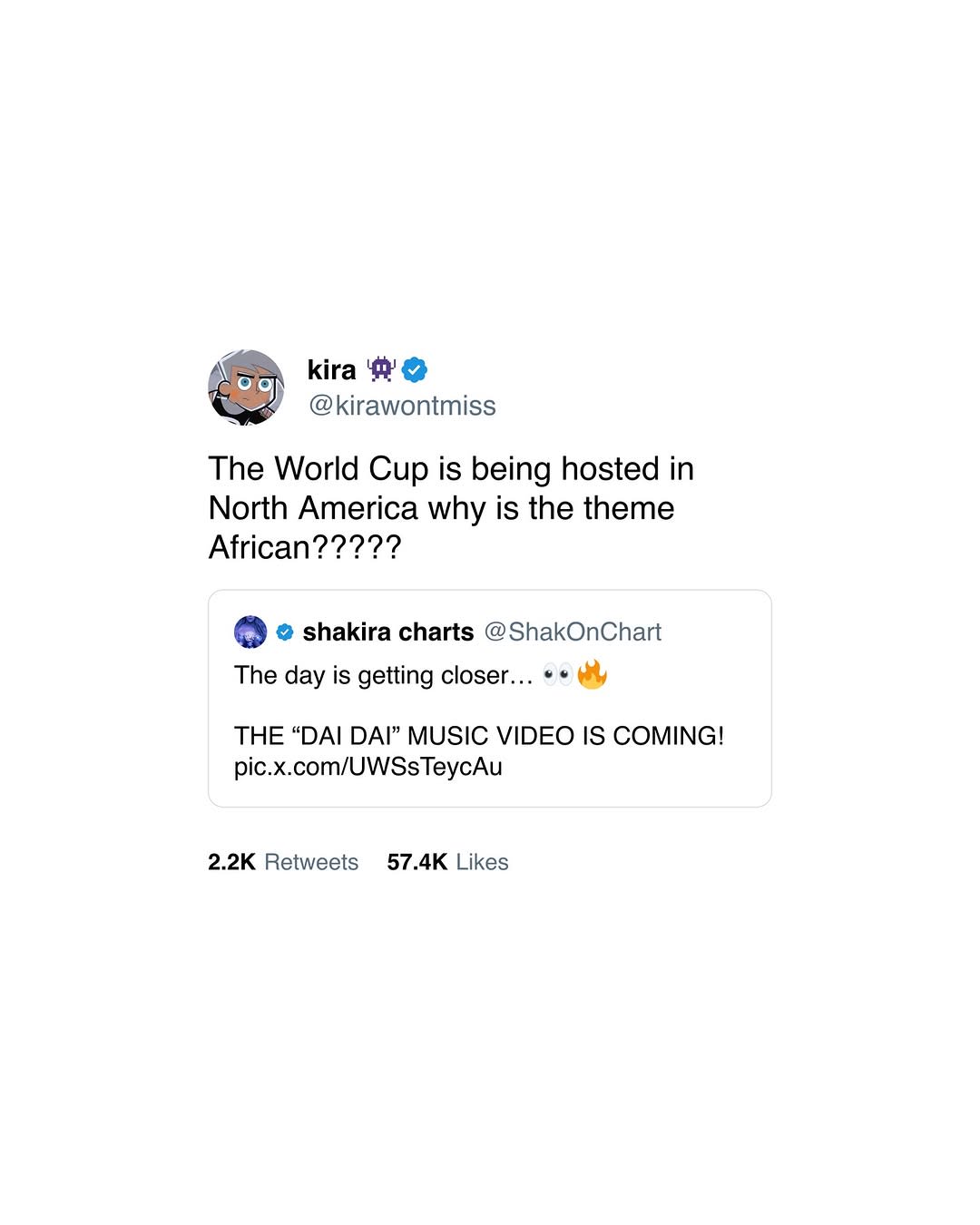
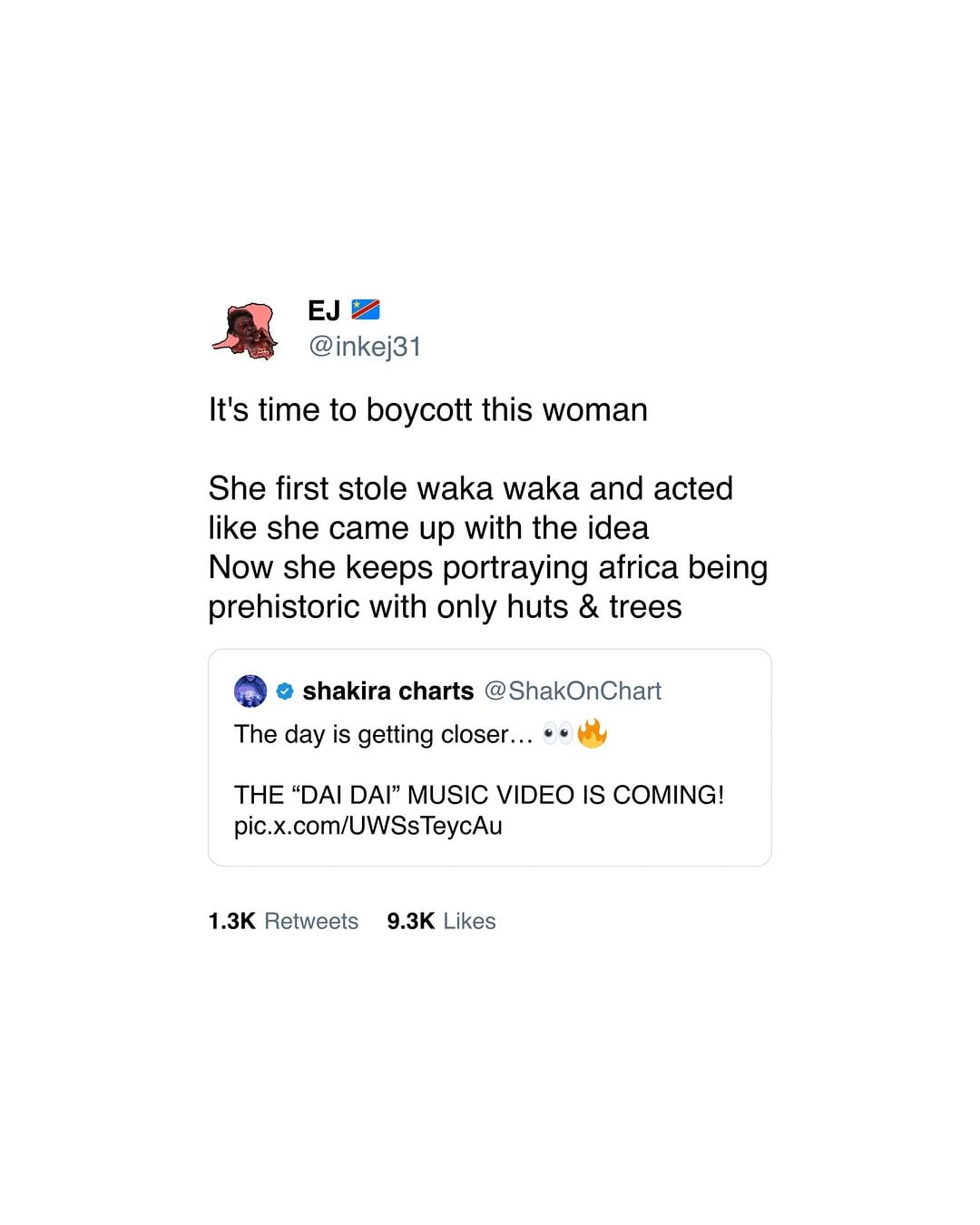
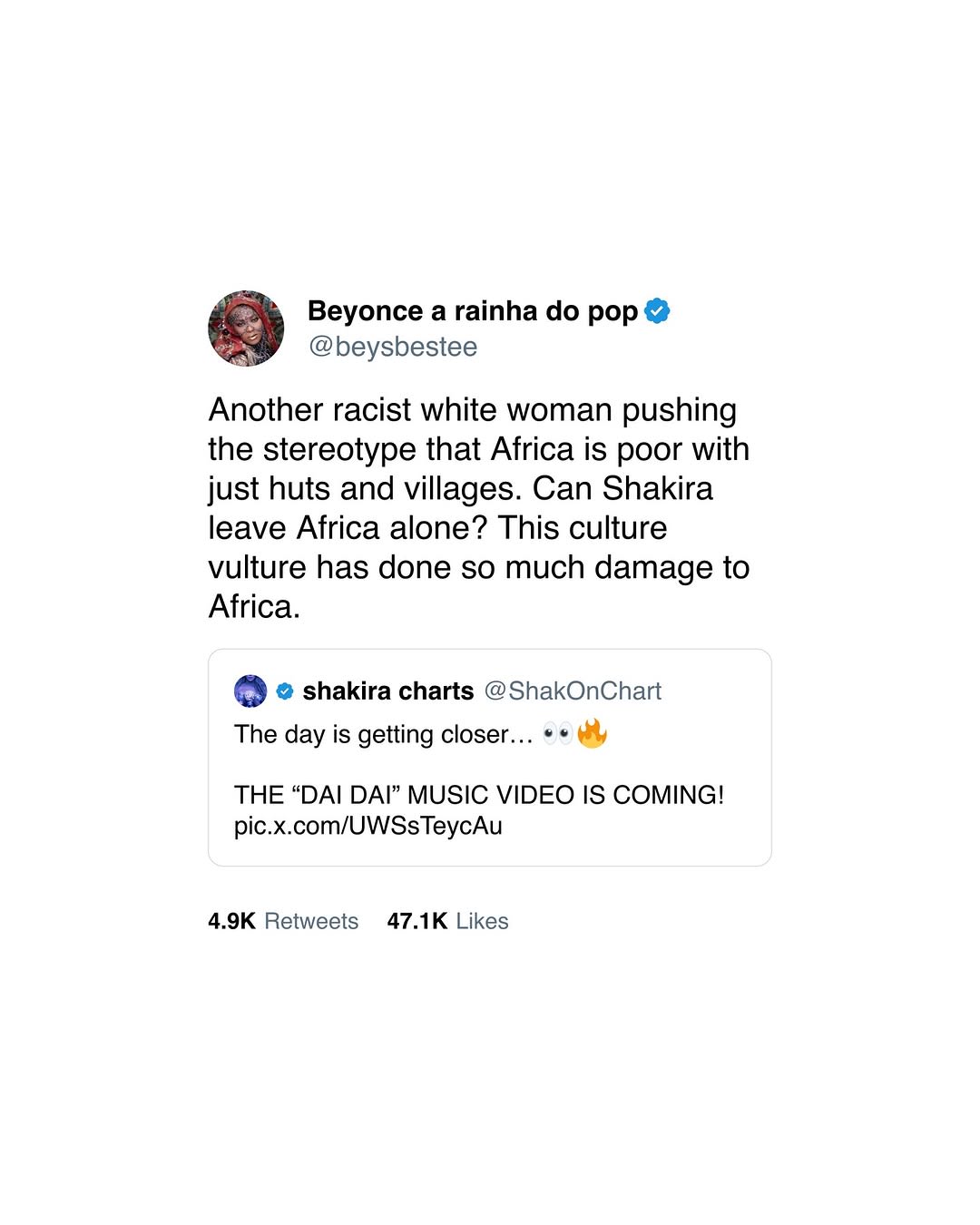
Upon the announcement, people were naturally excited. But upon the release of its teaser, reservations emerged, primarily from Africans, a continent that is a major stakeholder in football culture.
Here is one out of hundreds.
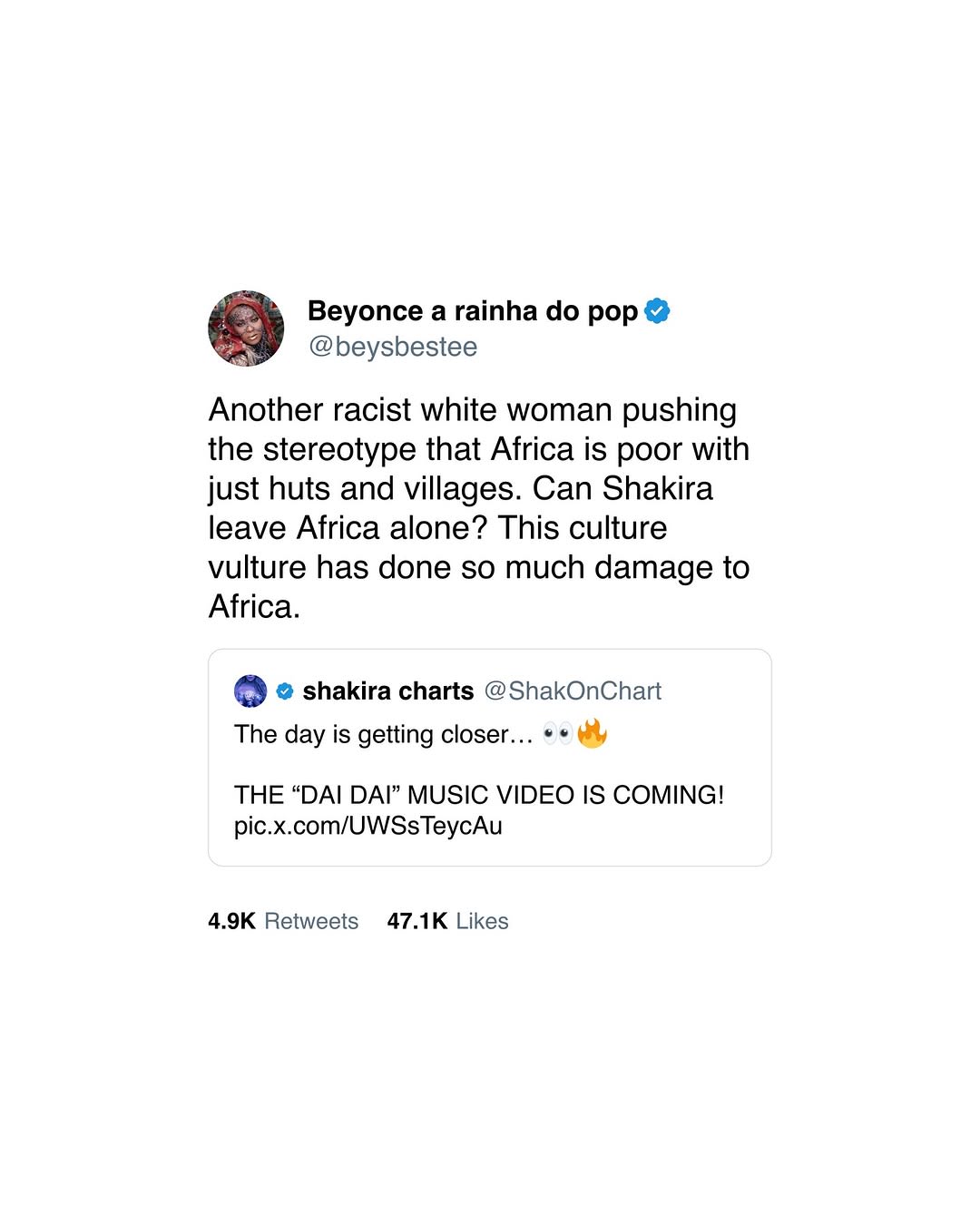
And these comments are justified. Between 2010 and today, Africans have developed zero tolerance for the prehistoric "village and huts" propaganda, even if it appears for only a few seconds in a music video.
The title "Dai Dai" is an Italian phrase that translates to "let's go" or "come on." It serves as a rallying call within the song, setting the tone for an anthem centred on resilience, determination, and unity. Directed by acclaimed music video director Hannah Lux Davis, well-regarded for her work on high-profile pop music videos and known for previous collaborations with Shakira, the video features a sweep of global locations. Shakira dances on rooftops in Rio de Janeiro, Brazil; she sings atop a globe, a visual meant to signal worldwide unity around the World Cup; she falls backwards into a football pitch, the Maracanã Stadium; and she performs atop the Angel of Independence monument in Mexico City. All bold, modern imagery.
But where were the huts? Where was the arid land? Africa?
Perhaps that scene was nostalgia bait, a nod to the generation that once screamed "Waka Waka, eh eh", but what happens when that core demographic has grown sensitive to certain portrayals of Africa, regardless of context? Do we like the song? Yes. Are we still excited for the World Cup? Yes. And to be absolutely clear: this is not a cancel-Shakira piece.
However, we must call out inconsistencies. What we say must align with what we do. Did the Dai Dai music video go through audience screenings? For a World Cup anthem, it should have. And if it did, and no one raised this concern, or those who did weren't heard, then we have a far bigger problem than a music video.